Best White Noise Sound Machines for Better Sleep in 2026
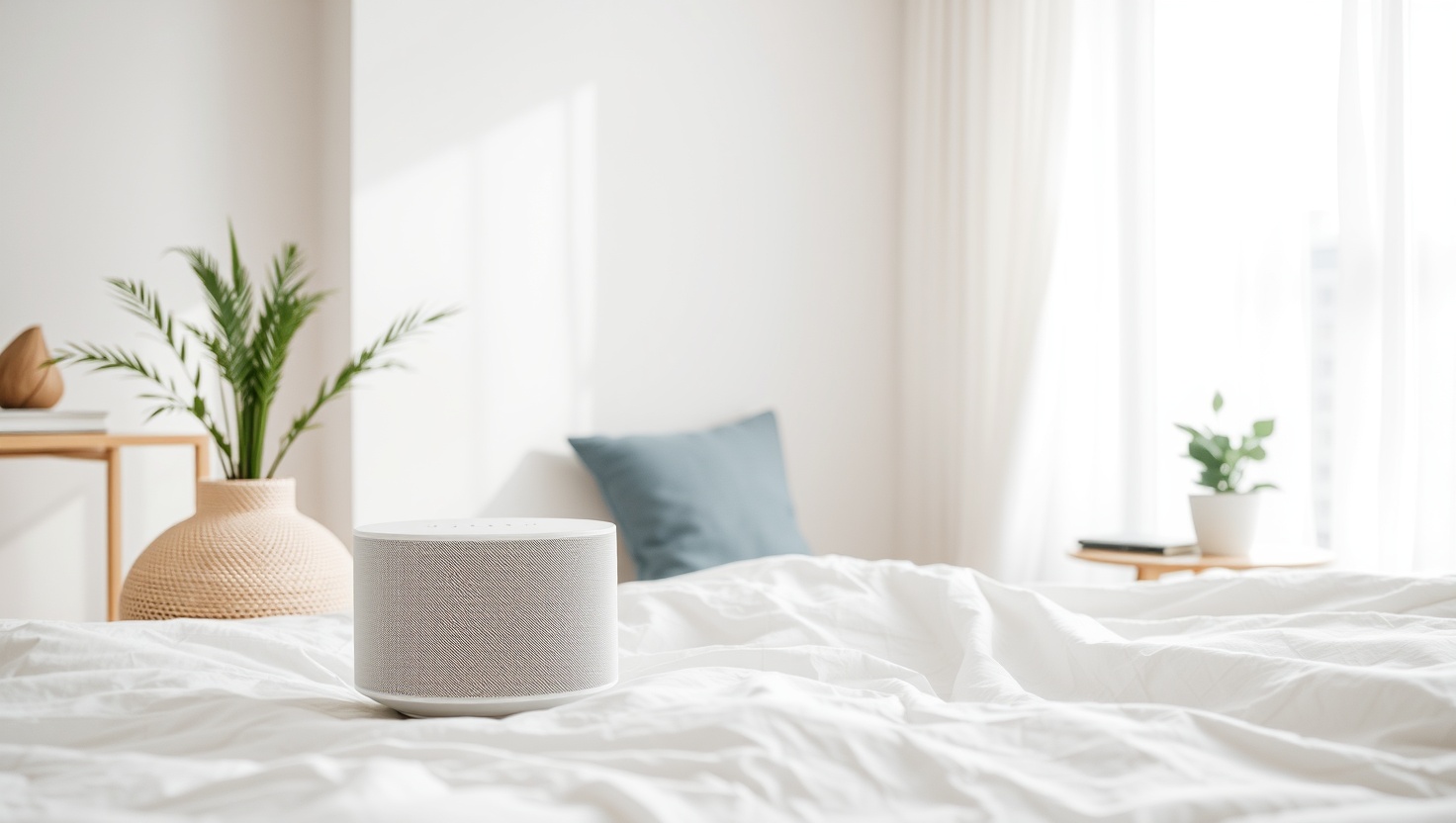
You're using your phone as a sleep app. That's like using a candy bar as medicine — the delivery system is the problem. Yes, the rain sounds are relaxing. But your phone is sitting six inches from your face, pushing melatonin-crushing blue light into your eyes, ready to buzz, ping, or pull you into a doomscroll spiral the moment you can't sleep. A dedicated white noise machine does the same job with zero blue light, zero notifications, and zero temptation. It just helps you sleep. Here are the best ones in 2026.
LectroFan EVO — Best Overall
The LectroFan EVO is the gold standard for a reason. It packs 22 unique sounds — 10 fan variations, 10 electronically generated noise variants (white, pink, brown, and more), plus 2 ocean sounds. All…
In a hurry? That’s our pick. Want the reasoning and the full comparison? Keep reading.
Key Takeaways
- Dedicated sound machines outperform phone apps because they eliminate blue light and notifications from your bedroom
- Non-looping audio is critical — your brain detects repeated loops and partially wakes up, breaking your sleep cycle
- Best overall: LectroFan EVO (~$50) — 22 non-looping sounds, precise volume, zero gimmicks
- Best budget: Magicteam Sound Machine (~$20) — Amazon bestseller with 20 sounds and 32 volume levels
- Best for babies and travel: Dreamegg D11 Max (~$30) — clips on, charges via USB, includes night light
- Best premium: Hatch Restore 2 (~$130) — sunrise alarm + sound + reading light in one app-controlled unit
Why Your Phone Is Terrible at Sleep
Phone sleep apps have one fundamental design flaw: they run on your phone. Your phone is an attention slot machine built by the world's smartest engineers to keep you engaged. Putting it on your nightstand and expecting it to help you sleep is optimistic at best.
The screen emits blue-spectrum light that tells your brain it's midday. Your melatonin production drops. You lie awake. You check the time. You check your messages. You check your messages again. Before you know it, it's 1:30am and you're watching compilation videos of dogs being scared by cucumbers.
A dedicated white noise machine has none of those problems. It produces sound. That's it. It won't notify you. It won't tempt you. It won't emit light (most don't). It's the single-purpose tool your bedroom needs.
The Loop Problem (Most People Don't Know About This)
Not all white noise is created equal. Many cheap Bluetooth speakers and free apps play audio files on a loop — the sound fades out and restarts every 30 to 60 minutes. Your conscious mind doesn't notice. Your sleeping brain absolutely does.
The moment your brain detects that distinctive "end of file" silence or volume dip, it partially surfaces from sleep. You don't fully wake up, but you lose the deep restorative sleep you were building. Over a full night, those micro-arousals add up. You wake up feeling like you slept badly — because you kind of did.
The machines on this list all produce continuous, non-looping audio. Some generate sound electronically (like white noise generators). Others use a real mechanical fan. Either way, the audio never repeats because it's never the same twice. That's what you want.
White vs. Pink vs. Brown — What's the Difference?
White noise contains all audible frequencies at equal intensity. It sounds like a TV hiss or an air conditioner — sharp, full, and a bit harsh for some people.
Pink noise reduces higher frequencies, giving you something closer to steady rainfall or a rustling forest. Most people find it more natural and easier to drift off to.
Brown noise drops the frequencies even further — deep, rumbling, like a strong river or distant thunder. It's become popular for focus and sleep, especially among people who find white noise too sharp.
The right type is personal. The machines below cover all three. Start with pink noise if you're not sure — it's the most universally liked.
Quick Comparison
| Machine | Price | Best For | Sounds | Non-Looping |
|---|---|---|---|---|
| LectroFan EVO | ~$50 | Best overall | 22 | Yes |
| Hatch Restore 2 | ~$130 | Premium bedside | Dozens | Yes |
| Dreamegg D11 Max | ~$30 | Babies & travel | 21 | Yes |
| Magicteam | ~$20 | Best budget | 20 | Yes |
| Yogasleep Dohm | ~$45 | Mechanical purist | Real fan | Yes (mechanical) |
The 5 Best White Noise Sound Machines in 2026
The LectroFan EVO is the gold standard for a reason. It packs 22 unique sounds — 10 fan variations, 10 electronically generated noise variants (white, pink, brown, and more), plus 2 ocean sounds. All of them are non-looping. The volume control is surgical: you can dial it up from a whisper to a genuine sound wall that drowns out traffic, snoring partners, or apartment neighbors having opinions at 2am.
It's compact — about the size of a hockey puck — and runs on AC power, so no battery anxiety. There's no bright LED display, no app required, no subscription. You plug it in, pick a sound, set a volume, and sleep. That's the whole product. More machines should be this focused.
Pros
- 22 non-looping sounds
- Precise, wide volume range
- Compact and minimal design
- No bright display lights
- AC powered — no batteries to die
Cons
- AC only (no battery/travel mode)
- No sunrise alarm or light
- No app or remote control
The Hatch Restore 2 is the bedside companion for people who are serious about their sleep environment. It combines a sunrise alarm clock (the light gradually brightens over 30 minutes, waking you naturally instead of with a jolt), a premium sound machine with dozens of sounds, and a warm reading light — all in a single attractive unit. It's the three-in-one solution that eliminates the last remaining excuses for keeping your phone on the nightstand.
You control routines through the Hatch app: set your wind-down sequence (dim the light, bring in the rain sounds), your sleep target, and your sunrise wake-up window. The app is the only time you use your phone in this equation — and you do that setup during the day, not in bed. At night, your phone stays in another room.
The subscription (Hatch+ at around $5/month) unlocks a full library of sounds and guided content. The base device works fine without it, but the library is genuinely good if you want variety.
Pros
- Sunrise alarm replaces phone alarm
- Warm reading light included
- App-controlled routines
- Beautiful, minimal hardware design
- Completely replaces phone nightstand role
Cons
- Expensive at $130
- Optional subscription for full library
- App required for full features
The Dreamegg D11 Max is the one you grab when portability matters. It clips onto a stroller, a crib rail, or a travel bag. It charges via USB-C, runs for hours on battery, and fits in a jacket pocket. For parents navigating the chaotic sleep schedules of babies and young children, this is a game-changer.
It packs 21 sounds — white noise, lullabies, heartbeat sounds (great for newborns who miss the womb), nature sounds, and fan variations. The soft night light is dim enough not to disturb sleep while giving just enough glow to navigate a room at 3am without turning on an overhead light. The timer options let you set it to play for 30, 60, or 90 minutes or run continuously through the night.
Adults use this one too — it's a solid travel companion and doubles up as a desk sound machine for open-plan offices. The sound quality is impressive for the price and size.
Pros
- Portable and clip-on design
- USB-C rechargeable
- 21 sounds including heartbeat
- Soft night light included
- Excellent value at $30
Cons
- Smaller speaker than home units
- Battery needs charging
- Less volume ceiling than LectroFan
At $20, the Magicteam punches way above its weight. It's an Amazon bestseller for good reason: 20 non-looping sounds, 32 volume levels (that's more granularity than most $60 machines), a timer, and USB or AC power options. Setup takes about 10 seconds.
The sound selection covers white, pink, and brown noise, plus fan sounds, ocean waves, rainfall, and a handful of nature options. The volume range is genuinely useful — quiet enough for a baby's room, loud enough to block out a noisy street or a snoring partner. The 32-step volume control means you'll always find the exact level you need.
If you've been using a phone app and want to try a real machine without committing to a $50-plus device, this is where you start. Many people who buy this never bother upgrading because it simply works.
Pros
- Only $20 — lowest barrier to entry
- 20 non-looping sounds
- 32 precise volume levels
- USB and AC powered
- Amazon bestseller with thousands of reviews
Cons
- Basic design, no premium feel
- Smaller speaker size
- No app, timer limited to basic presets
The Yogasleep Dohm Classic (originally made by Marpac, the company that invented the white noise machine in 1962) doesn't play audio files. It doesn't generate digital waveforms. It runs a real fan inside an acoustic housing, and the sound it produces is the actual airflow from that fan — not a recording of one. That distinction matters to a surprising number of people.
The result is a warm, natural "shh" sound that never loops because it's never the same. Two speed settings and a rotating housing let you tune the tone and volume. High speed for louder, brighter masking. Low speed for a softer background presence. There's something almost meditative about the mechanical simplicity of the thing.
It doesn't have 22 sounds or an app. It doesn't need them. If you've tried digital machines and something always felt slightly off, the Dohm is what you've been looking for.
Pros
- Real mechanical fan — the most natural sound
- Genuinely non-looping (it's live airflow)
- Simple, proven design since 1962
- No digital artifacts or compression
- Durable, long-lasting hardware
Cons
- Only two volume/tone settings
- Fan-only sound (no rain, waves, etc.)
- Slightly louder at minimum than some want
How to Get the Most Out of Your Sound Machine
Placement matters more than people think
Don't put the machine directly next to your pillow. Two to four feet away is the sweet spot — close enough to mask environmental noise, far enough that you're not bathing your ears in direct sound all night. If you share a room or apartment, placing the machine near the door or window helps mask noise before it reaches you.
Volume: louder than you think, quieter than you fear
Most people start too quiet, then wonder why it's not helping. The sound should be loud enough to mask your environment but quiet enough that you're not straining to hear over it. A rough guide: if you can hold a conversation at normal volume while it's running, it's probably too quiet to do its job.
Use it every night, not just when it's loud
Your brain is an association machine. Once you've used a sound machine consistently for a few weeks, the sound itself becomes a sleep trigger — your nervous system starts shifting into rest mode when it hears it. That conditioning is a feature, not a dependency. Use it every night and let that association build.
Pair it with a screen-free bedroom
A sound machine is one piece of the puzzle. The full picture is a bedroom that doesn't contain a glowing rectangle trying to steal your attention. Phone in another room. Sound machine on. Analog alarm clock on the nightstand. That combination is genuinely powerful.
Who Needs a White Noise Machine?
If you live in a city, apartment building, or shared space — you. Urban environments average around 60-70 dB of ambient nighttime noise. Your brain processes that noise even while you sleep, preventing the deepest stages of sleep from happening properly. A white noise machine masks that, consistently and passively.
If you have a baby or young child — definitely you. Infants are accustomed to constant in-womb noise (louder than a vacuum cleaner, as it turns out). The silence of a bedroom is actually disorienting for newborns. A consistent sound helps them settle and stay asleep longer, which also helps you sleep longer.
If you're a light sleeper who wakes at every creak and passing car — yes. If you work odd hours and sleep while others are awake — absolutely. If you scroll Instagram for 40 minutes instead of sleeping because your phone is right there — that's the most important one, and you're reading the right article.
Take Back Your Sleep Tonight
Your phone doesn't belong in your bedroom. Pick your sound machine, put your phone on the charger in the hallway, and see what eight uninterrupted hours actually feels like.
Start with the LectroFan EVO →