Best Self-Watering Planters for Indoor Herbs and Vegetables (2026)
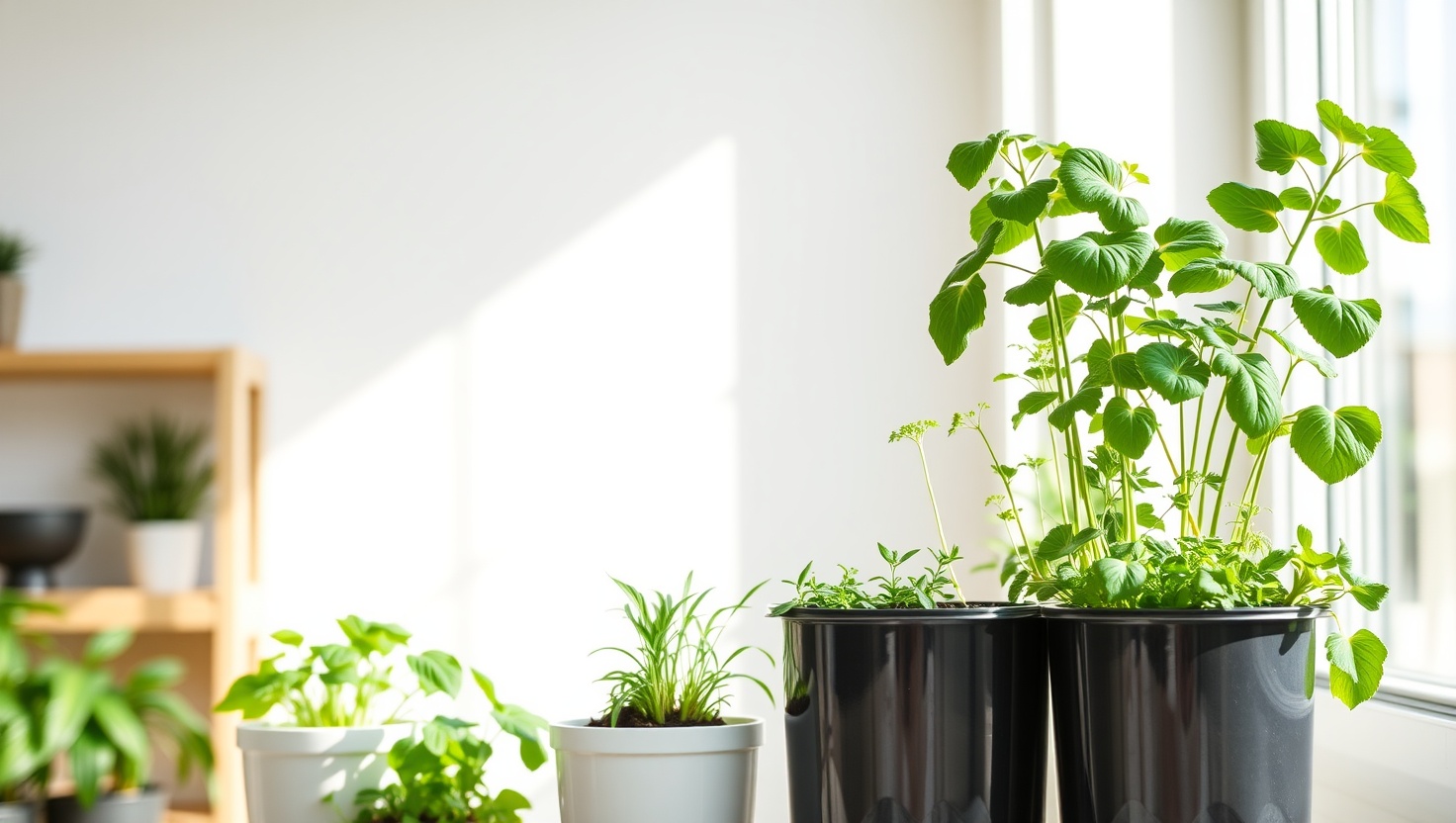
Overwatering kills more indoor plants than neglect ever will. Self-watering planters solve this by letting your plants drink exactly what they need — no guessing, no guilt trips when you forget. Whether you want fresh basil on your kitchen counter or a mini lettuce patch on your windowsill, a good self-watering planter removes the biggest barrier to indoor growing: inconsistency.
We tested and researched the best self-watering planters for indoor herbs and vegetables available in 2026 so you don't have to wade through hundreds of listings and vague reviews. Here's what actually works.
Key Takeaways
- Self-watering planters use a reservoir and wicking system — roots pull water up as needed, preventing rot and underwatering simultaneously
- Herbs like basil, mint, parsley, and chives thrive in self-watering containers; lettuce and peppers do too
- Reservoir capacity matters most for vegetables — look for at least 1.5L for anything bigger than herbs
- The Gardenix 3-Pack ($25) is the best value entry point for windowsill herbs
- If you have a dark apartment, the GrowLED combo ($30) solves the light problem at the same time
- Match planter size to plant root depth — shallow-rooted herbs need less depth than tomatoes or peppers
How Self-Watering Planters Actually Work
Most people picture self-watering planters as some complicated hydroponic system. They're not. The concept is beautifully simple: a reservoir sits at the bottom of the container, and a wicking medium (usually a cotton wick, porous potting mix, or a perforated inner pot) draws moisture upward into the root zone. Your plant pulls water from the roots up as it needs it — a process called capillary action.
The Wicking System Explained
The wick — whether it's a rope, a built-in tube, or the potting mix itself — acts like a passive pump. When soil moisture drops below a certain level, capillary force pulls more water from the reservoir upward. This means your plant is always working with a stable moisture level rather than swinging between soaking wet and bone dry. That consistency is what makes indoor growing dramatically easier.
Reservoir Basics
Most self-watering planters have a transparent or marked water window on the side so you can see how full the reservoir is. You top it up every 1–3 weeks depending on plant size, season, and how much light the plant gets. Some larger designs (like the Vego Garden raised planter) hold enough water to last two to three weeks without any intervention. That's genuinely game-changing if you travel or just live a busy life.
One thing to watch: never let the reservoir sit completely full for too long in low-light or cool conditions. Stagnant water can breed root rot if the plant isn't drinking fast enough. In summer with plenty of light, this is almost never an issue — the plant drinks constantly.
Related: If you're just getting started with growing indoors, check out our guide to the best indoor herb garden kits in 2026 — including grow-light systems and hydroponic options for zero-natural-light spaces.
Best Plants for Self-Watering Planters
Herbs That Love Consistent Moisture
Not every herb is ideal for a self-watering setup, but most culinary herbs thrive in them. Here's what grows best:
- Basil — loves consistent moisture, hates drying out between waterings. Self-watering planters are practically perfect for it.
- Mint — aggressive grower that drinks a lot. Give it its own planter (it'll take over any container it shares).
- Parsley — slow to establish but flourishes with steady moisture. Great for a kitchen windowsill planter.
- Chives — almost indestructible, and the wick system keeps them from ever going truly dry.
- Cilantro — bolts in heat and drought; consistent moisture slows bolting significantly.
Herbs that prefer to dry out between waterings — like rosemary, thyme, and lavender — are less suited to self-watering containers. You can still use them, but keep the reservoir only half-full to reduce moisture levels.
Vegetables Worth Growing Indoors
Small-footprint vegetables work surprisingly well in self-watering containers. The best picks for indoor growing:
- Lettuce and salad greens — shallow roots, fast growth, thrive with steady moisture. A 12-inch self-watering planter can produce a continuous cut-and-come-again harvest.
- Spinach and Swiss chard — both prefer moist soil and handle lower light reasonably well.
- Peppers — compact varieties like chili peppers or mini bell peppers do well in 6–8 inch self-watering containers near a sunny window.
- Cherry tomatoes — need a bigger reservoir (at least 5L) and a sunny south-facing window or grow light, but absolutely doable.
- Radishes and green onions — fastest-growing options, perfect for beginners wanting a quick win.
Sizing Guide: Matching Planter to Plant
Getting the size wrong is the most common beginner mistake. Here's a practical guide:
| Plant Type | Minimum Pot Depth | Minimum Diameter | Reservoir Size |
|---|---|---|---|
| Herbs (basil, mint, parsley) | 6 inches | 4–6 inches | 0.5–1L |
| Lettuce / Salad greens | 6–8 inches | 8–12 inches | 1–2L |
| Spinach / Chard | 8 inches | 8–10 inches | 1.5–2L |
| Peppers | 10–12 inches | 8–10 inches | 2–3L |
| Cherry tomatoes | 12–14 inches | 12–14 inches | 4–6L |
Indoor Placement Tips
Self-watering planters won't save plants from insufficient light. Placement matters as much as watering. Here's what works:
- South-facing windowsills are the gold standard — 6+ hours of direct light for most vegetables and sun-loving herbs.
- East or west windows work for low-light herbs like mint, parsley, and chives.
- No good windows? A grow light paired with a self-watering planter (like the GrowLED combo below) is the complete solution.
- Keep planters away from heating vents and air conditioning units — both dry out soil and stress plants regardless of your reservoir level.
- Group planters together to raise local humidity, which most herbs appreciate.
Also worth reading: Want to scale up? Our guide to container gardening for apartments and balconies in 2026 covers larger setups, vertical planters, and maximizing small outdoor spaces.
The 5 Best Self-Watering Planters for Indoor Herbs and Vegetables in 2026
Best value for windowsill herbs — three pots for less than the price of one premium planter
If you're just getting started with indoor herbs and don't want to commit serious cash, the Gardenix 3-Pack is the obvious starting point. You get three 6-inch self-watering pots — ideal for basil, parsley, and mint side by side on a kitchen windowsill. Each pot has a clear water indicator window and holds about 400ml in the reservoir, which keeps herbs going for 1–2 weeks between top-ups.
The design is clean and modern — white plastic with a minimalist finish that won't clash with your kitchen aesthetic. The wicking system is straightforward: a small inner basket sits above the reservoir, and a cotton wick pulls moisture upward. It works reliably for herbs, though we'd say it's less suited for thirstier vegetables that need a larger water supply.
Pros
- Excellent value — 3 pots for $25
- Clear water indicator window
- Clean, minimal design fits any kitchen
Cons
- Small reservoir — fine for herbs, limiting for vegetables
- Plastic feels lighter than premium options
Best premium option — European quality, large reservoir, built to last years
Lechuza is a German brand that's been making high-end self-watering planters since the 1990s, and the Cubico Color 22 shows why they've maintained their reputation. At 8.5 inches across and with a reservoir that holds up to 2.5 liters, this planter handles herbs and medium-sized vegetables with ease. The water gauge tells you exactly how full the reservoir is, and the drainage plug lets you prevent overflow during rainy season if you ever move it outdoors.
The build quality is noticeably superior to budget options — thick walls, UV-resistant plastic that won't fade or crack, and a sub-irrigation system (Lechuza's patented design) that delivers water directly to roots without any wick to replace. The Cubico is genuinely attractive enough to sit in a living room or on a dining table, not just hidden in a utility corner.
Pros
- Large 2.5L reservoir — weeks between refills
- Premium build quality, UV-resistant
- Elegant enough for living room display
Cons
- Most expensive option on this list
- Overkill for simple herb setups
Best for vegetables — elevated design, serious reservoir, grows real food
The Vego Garden planter is a step up in ambition from the typical windowsill herb pot. This is a proper raised planter box — big enough for a full salad greens harvest or a row of radishes and green onions — with a self-watering reservoir built into the base. It's made from BPA-free food-safe materials, which matters when you're growing food you're actually going to eat.
The elevated design keeps the planter at a comfortable height, reducing the need to crouch. Drainage holes are well-placed so excess water never pools in the root zone, and the reservoir holds enough water to sustain leafy greens for up to two weeks. Vego Garden has built a strong reputation in the raised bed community for durable, food-safe materials — this indoor version carries that same philosophy into a compact form factor.
Pros
- Food-safe BPA-free materials
- Large growing area — real vegetable harvests possible
- Elevated design, comfortable to tend
Cons
- Takes up more counter or floor space than compact pots
- Less decorative than premium planter options
Best for dark apartments — solves both watering AND light in one compact unit
Most self-watering planters assume you have a decent window. The GrowLED combo doesn't make that assumption. It pairs a self-watering reservoir system with a built-in full-spectrum LED grow light on an adjustable arm, meaning you can grow herbs anywhere in your home — on a bookshelf, under kitchen cabinets, or in a dark corner of your apartment. The light runs on a built-in timer (typically 16 hours on, 8 hours off) so you don't have to think about it.
At $30 it's remarkably capable. The reservoir holds around 600ml, which keeps basil and parsley going for about a week. The LED provides enough intensity for most herbs and leafy greens, though for fruiting vegetables like peppers you'd want something with higher wattage. For anyone who's killed herbs because their apartment doesn't get enough natural light, this is the honest solution rather than a workaround.
Pros
- Solves light AND watering problems in one unit
- Built-in timer — fully automated once set up
- Compact, works anywhere in your home
Cons
- Smaller reservoir than standalone planters
- Light not powerful enough for fruiting vegetables
Best for the kitchen counter — stylish, compact, purpose-built for cooking herbs
Cole & Mason is a UK kitchen brand best known for salt and pepper mills, and their Self-Watering Herb Keeper brings that same kitchen-first design philosophy to indoor growing. This is a compact planter designed specifically for one purpose: keeping fresh cooking herbs alive on your kitchen counter so you can snip them directly into your food.
The design is genuinely attractive — clean lines, good proportions, looks at home next to a coffee maker or on a kitchen shelf. The reservoir is modest (around 300ml) but sized appropriately for the single-herb format. Where it excels is in the details: a removable inner pot makes replanting easy, and the fill hole is positioned to be convenient without requiring you to disturb the plant. It's the right tool for a specific, common need.
Pros
- Most affordable option — $20
- Beautiful kitchen-first design
- Removable inner pot for easy replanting
Cons
- Single-pot format — not suitable for larger growing
- Small reservoir needs weekly refills for thirsty herbs
Maintenance Tips to Keep Your Planters Running Well
Refilling the Reservoir
Most self-watering planters have a fill tube or hole separate from the main soil area. Use this — don't pour water on top of the soil unless you're watering in freshly transplanted seedlings that need surface moisture to establish. Once established, let the reservoir do its job. Check the water level every 5–7 days initially until you get a sense of how fast your particular plant drinks.
Fertilizing in Self-Watering Systems
Because you're not watering from the top, nutrients don't flush out of the soil as fast as in traditional pots. This is mostly a good thing — less fertilizer needed overall. Use a diluted liquid fertilizer added to the reservoir water every 3–4 weeks during the growing season. Avoid over-fertilizing; with self-watering systems, salt buildup can occur over time in the soil.
Cleaning Between Plantings
When a plant finishes its life cycle or you want to switch to a different herb, empty the reservoir completely, remove old soil and roots, and rinse the reservoir with diluted white vinegar to kill any algae or bacterial buildup. Let it dry fully before replanting. This takes five minutes and prevents the musty smell some planters develop after a season of use.
Seasonal Adjustments
In winter, plants grow more slowly and drink less. Reduce your reservoir refill frequency and consider dropping it to half-full to avoid stagnant water. In summer, particularly near south-facing windows, plants may drink the reservoir down in just a few days — check more frequently during hot spells.
Going bigger outdoors? Our complete guide to the best containers for growing vegetables covers large-format options, fabric grow bags, and raised bed containers for patios and balconies.
Quick Comparison at a Glance
| Planter | Price | Best For | Reservoir | Rating |
|---|---|---|---|---|
| Gardenix Decor 3-Pack | $25 | Windowsill herbs (3-pot set) | ~400ml each | ★★★★½ |
| Lechuza Cubico 22 | $45 | Premium / Vegetables | 2.5L | ★★★★★ |
| Vego Garden Raised | $35 | Serious vegetable growing | Large | ★★★★½ |
| GrowLED + Light | $30 | No-window apartments | ~600ml | ★★★★ |
| Cole & Mason | $20 | Kitchen counter cooking herbs | ~300ml | ★★★★ |
The Bottom Line
Self-watering planters genuinely change the experience of growing food indoors. They remove the most common point of failure — inconsistent watering — and replace it with a passive system that works whether you remember or not. The technology isn't magic, but it's reliable, and reliability is exactly what beginning growers need to build confidence.
Start with the Gardenix 3-Pack if you want to learn the basics cheaply. Move to the Lechuza Cubico if you want something that will still be running in five years and looking great on your counter. And if your apartment doesn't have a good window, the GrowLED combo removes that final obstacle too.
You don't need a garden, a backyard, or even a particularly sunny apartment. You need the right container and a bit of patience. That's genuinely it.
Ready to Grow Your Own Food?
Start with fresh herbs on your kitchen counter. It takes less than 15 minutes to set up and you'll have fresh basil, mint, or parsley within weeks.
Get the Gardenix 3-Pack →Frequently Asked Questions
How often do I need to refill a self-watering planter?
It depends on plant size, pot capacity, and conditions, but a general rule is every 1–2 weeks for small herb planters and every 2–3 weeks for larger vegetable planters. In summer with strong sunlight, plants drink faster — you might need to top up a small herb planter every 5–7 days. In winter, every 2–3 weeks is more typical. Get in the habit of checking the water level indicator once a week until you learn your plant's rhythm.
Can I use regular potting soil in a self-watering planter?
Yes, regular potting mix works fine — but a mix specifically designed for containers (often labelled "container mix" or "potting compost") performs better. These mixes are lighter and have better drainage, which prevents waterlogging at the reservoir interface. Avoid heavy garden soil or topsoil, which compacts and doesn't wick moisture effectively. Adding 20–30% perlite to regular potting mix improves drainage and aeration significantly.
Do self-watering planters cause root rot?
They can, but it's much less common than with traditional watering. Root rot occurs when roots sit in stagnant water without oxygen — the wick system in self-watering planters prevents this by only delivering water to the soil layer above the reservoir, not directly to roots. The risk increases if the reservoir stays completely full in cold, dark conditions where plants aren't actively drinking. Keep the reservoir half-full during low-light winter months to reduce this risk.
What's the best potting mix for herbs in a self-watering planter?
A good-quality peat-free potting mix with added perlite is ideal. The perlite (white granules) improves drainage and air circulation around roots, which most herbs prefer. For Mediterranean herbs like thyme, oregano, and rosemary, use a sandier, more free-draining mix. For moisture-loving herbs like basil and mint, standard potting compost works perfectly. Refresh the potting mix every 12–18 months as it breaks down and loses its structure.
Can I grow tomatoes in a self-watering planter indoors?
Yes, but you need the right conditions. Compact or dwarf tomato varieties (like Tumbling Tom, Tiny Tim, or Window Box Cherry) work best. You'll need a large planter with at least a 5L reservoir, a very sunny south-facing window or a decent grow light (at least 200W LED equivalent), and regular fertilizing — tomatoes are heavy feeders. Expect smaller yields than outdoor growing, but it's absolutely possible to harvest cherry tomatoes from an indoor self-watering setup.