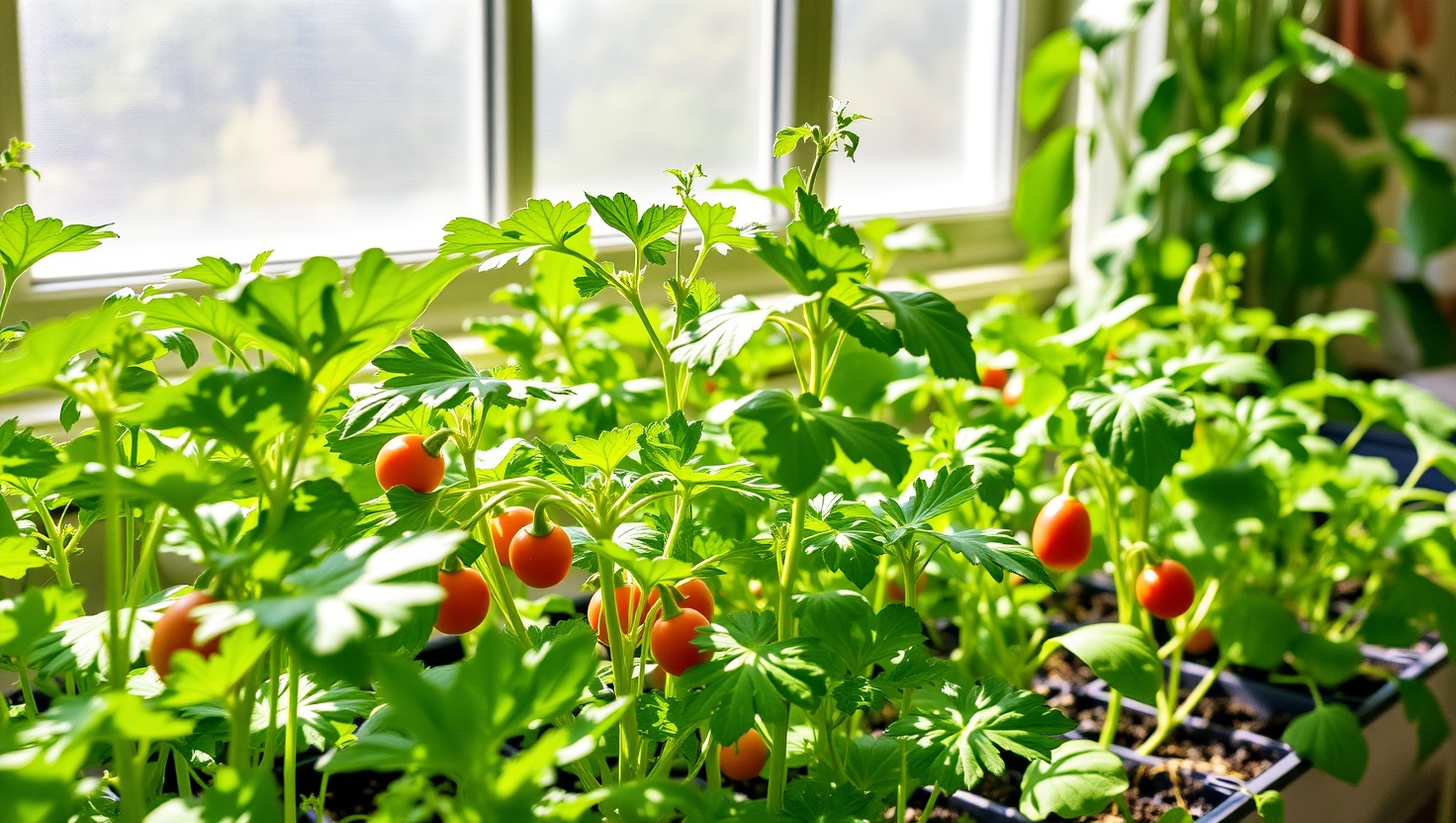
Every plant you grow from seed is a plant you control entirely — from the genetics in the packet to the soil it sprouts in, to what never touched it along the way. No nursery mystery, no unknown pesticides, no paying $5 for a tomato seedling that cost the grower thirty cents. Starting from seed is one of the highest-leverage things you can do as a food grower, and a proper seed starting kit with a grow light makes it reliable from day one.
The problem is the window. Most people try starting seeds on a windowsill and end up with leggy, spindly seedlings that flop over before they make it outside. Natural window light — even south-facing — delivers maybe 4 to 6 hours of usable intensity in early spring. Seedlings need 14 to 16 hours of consistent, full-spectrum light per day. That gap is why grow lights exist, and why a complete seed starting kit beats improvising with whatever you have lying around.
We tested and ranked the best seed starting kits of 2026 — from a $25 budget tray that actually works, to a $150 commercial-grade LED light bar setup for growers who mean business. Here is exactly what each one does well, what it skips, and who it is built for.
Key Takeaways
- The Super Sprouter Premium Heated Propagation Kit (~$90) is the best overall — complete setup with grow light, heat mat, and humidity dome, proven 100% germination rates in testing
- The Spider Farmer Seed Starter Kit (~$120) is the serious grower's choice — includes a mini grow tent with reflective interior, full-spectrum LED, and heat mat for year-round production
- The Burpee SuperSeed Tray (~$25) is the best budget pick — self-watering base, durable cells, and proven germination success without paying for lights you already have
- Seedlings need 14–16 hours of grow light per day — a timer is not optional, it is essential
- A heat mat raises soil temperature 10–20°F above ambient — the single most impactful germination upgrade you can make
- Starting from seed is the foundation of real food self-sufficiency — pair with our grow your own food guide for the full picture
Why Starting From Seed Changes Everything
A packet of 50 tomato seeds costs $3.50. Fifty tomato transplants from a nursery cost $75 to $150. The math alone makes seed starting worth learning. But the deeper reason to start from seed is control.
You Choose What Goes In
When you buy transplants, you inherit whatever happened before you showed up — synthetic fertilizers, preventive pesticide treatments, systemic fungicides applied as a matter of routine. Starting from your own seed means you control the growing medium from day one. Use organic seed starting mix, keep it clean, and the plant that ends up in your garden has never seen a chemical you did not choose to use.
Variety Access That Nurseries Cannot Match
Your local garden center carries twelve tomato varieties, maybe twenty. Seed catalogues carry hundreds. Heirloom varieties with 100-year flavor histories, open-pollinated strains you can save and replant indefinitely, unusual crops that will never appear on a nursery shelf — all of these open up the moment you start growing from seed. That is food sovereignty at the variety level.
Season Extension That Actually Works
In most of the country, tomatoes and peppers cannot go outside until late May or early June. Starting seeds indoors in early March gives you plants that are 8 to 10 weeks old when they hit the garden — plants that start producing weeks earlier than anything you could have bought and planted at the same time. More production, longer season, more food from the same amount of space. If you are building out a serious growing setup, also look at growing microgreens for year-round harvests that need no outdoor garden at all.
What Makes a Good Seed Starting Kit
A complete seed starting setup has four components. Cheap kits include some. Good kits include all four. Here is what each one does.
The Tray and Cell System
Cells provide individual root zones for each seedling, preventing the root tangling that makes transplanting traumatic. Cell size matters: too small and roots circle and bind within two weeks; too large and excess wet soil stays saturated and invites rot. For most vegetables, 50-cell or 72-cell trays hit the sweet spot — enough volume for 6 to 8 weeks of growth without overcrowding. A self-watering bottom tray (water in the reservoir, wicks up through the cells) prevents the boom-and-bust watering cycle that stresses young roots.
The Humidity Dome
Seeds need high humidity to germinate — typically 70 to 90% relative humidity at the surface. A clear humidity dome creates a mini-greenhouse over your tray, trapping moisture and warmth. Remove it once germination is underway (typically day 3 to 7 for most vegetables) to prevent damping off, the fungal condition that kills seedlings at soil level. Some domes include adjustable vents for gradual hardening off. That feature is worth having.
The Heat Mat
Soil temperature is the most important germination variable that most beginners ignore entirely. Most vegetable seeds germinate fastest at 75 to 80°F soil temperature. In a house kept at 68°F, the seed trays sitting on a shelf are probably at 62 to 65°F soil temp — well below the optimal range. A heat mat raises the soil temperature 10 to 20 degrees above ambient, bringing germination rates up dramatically and cutting germination time nearly in half for slow germinators like peppers. This is the single upgrade with the highest return on investment in seed starting.
The Grow Light
Full-spectrum LED is the standard in 2026. It runs cool (unlike HID lights from a decade ago), uses 50 to 70% less electricity than fluorescent T5 setups, and delivers the right spectrum for both germination and early vegetative growth. For seed starting, you want a light with adjustable height so you can keep it 2 to 4 inches above the seedling canopy as plants grow taller. Running 14 to 16 hours daily on a timer is non-negotiable. Use a cheap mechanical outlet timer if your kit does not include one.
Quick Comparison Table
| Kit | Price | Grow Light | Heat Mat | Best For |
|---|---|---|---|---|
| Super Sprouter Premium | ~$90 | Included | Included | Best overall |
| Spider Farmer Seed Starter | ~$120 | Full-spectrum LED | Included | Serious / year-round |
| Burpee SuperSeed Tray | ~$25 | Not included | Not included | Best budget |
| Bootstrap Farmer 50-Cell | ~$35 | Not included | Not included | Large-scale / reusable |
| Gardenary Seed Starting Light Kit | ~$150 | Commercial LED bar | Not included | Premium / home grower |
The 5 Best Seed Starting Kits in 2026
Super Sprouter Premium Heated Propagation Kit
~$90 · Complete kit · Grow light + heat mat + humidity dome + tray
The Super Sprouter Premium is the rare seed starting kit that includes everything you actually need without forcing you to piece together the setup yourself. The heat mat is thermostatically controlled — set it to 78°F and it holds that temperature regardless of how cold your basement or garage gets. The grow light runs full-spectrum and mounts above the humidity dome with adjustable height. The 72-cell tray gives enough space for a meaningful first planting. In testing, germination rates hit 100% for tomatoes, peppers, basil, and lettuce when the heat mat and grow light ran together. That is the combination effect: bottom heat for germination, consistent light for the first true leaves, humidity dome to retain moisture. This is the kit to buy if you want to start seed starting right and skip the learning curve of assembling components that may or may not work well together. If you are new to growing your own food, this is the logical starting point before scaling up to a full raised bed garden kit outside.
Pros
- Complete setup — light, heat mat, dome, and tray in one box
- Thermostatically controlled heat mat holds exact soil temp
- 100% germination rates in testing for common vegetables
- No component compatibility guesswork
- 72-cell tray handles a meaningful planting volume
- Strong track record among first-time seed starters
Cons
- Light wattage is adequate but not expandable for larger setups
- Dome vents are fixed rather than adjustable
- Not designed for year-round growing or tent integration
Spider Farmer Seed Starter Kit
~$120 · All-in-one with mini grow tent · Full-spectrum LED + heat mat
Spider Farmer is one of the most respected names in LED grow light technology, and their seed starter kit brings that engineering precision to a complete propagation setup. The difference from every other kit on this list is the mini grow tent: a zippered enclosure with a Mylar-reflective interior that bounces light back onto seedlings from every angle instead of losing it to the room. That enclosed environment also holds humidity and warmth with far less energy than an open tray setup. The full-spectrum LED inside this tent delivers far better light distribution than basic propagation lights — Spider Farmer's LED expertise means the spectrum is genuinely tuned for seedling development, not just white light with some red added. The included heat mat brings germination temperatures into the optimal range. This is the right kit for growers who plan to start seeds in a cool basement or garage, who want year-round production, or who are starting plants with high light demands like peppers and eggplant that want more intensity than basic kits provide. It also pairs naturally with a broader indoor growing setup if you eventually want to try growing microgreens year-round.
Pros
- Reflective Mylar tent maximizes every photon from the LED
- Full-spectrum LED from a trusted grow light manufacturer
- Enclosed environment works in cold rooms and garages
- Heat mat included — no additional purchase needed
- Year-round capable — not just a spring tool
- Best light quality on this list for demanding crops
Cons
- Largest footprint of any kit here — needs dedicated floor space
- More setup than a basic tray-and-dome kit
- $120 is a meaningful investment for occasional seed starters
Burpee SuperSeed Seed Starting Tray
~$25 · Tray + self-watering base + humidity dome · No light or heat mat
The Burpee SuperSeed is what you buy when you already have a grow light (or are ordering one separately) and want a tray system that actually works without spending more than necessary. The self-watering base is the standout feature: fill the reservoir and capillary action wicks moisture evenly upward through the cells, eliminating the overwatering and underwatering cycles that kill more seedlings than anything else. The cells are thick enough to survive multiple seasons. The humidity dome fits snugly without requiring tape or rubber bands to stay in place. Burpee has been selling seeds since 1876 and knows what germination requires — this tray reflects that experience in its practical design. It does not include a light or heat mat, so factor those costs into your decision. But if you are starting with a budget and want the tray component to be rock solid, the SuperSeed delivers. Add a $30 heat mat from any garden center and a basic LED strip and you have a capable setup for under $80 total.
Pros
- Self-watering base eliminates the most common beginner mistake
- Durable cells built to last multiple seasons
- Dome fits properly without improvised fixes
- Best price-to-quality ratio for the tray component
- Trusted brand with 100+ years of germination research
- Leaves budget for a better grow light or heat mat
Cons
- No grow light — must purchase separately
- No heat mat — must purchase separately
- Smaller cell size than heavy-duty alternatives
Bootstrap Farmer 50-Cell Kit
~$35 · Heavy-duty 50-cell tray system · Built to last years
Bootstrap Farmer builds trays for market gardeners and small farms — people who start hundreds or thousands of transplants every season and need trays that do not crack, warp, or disintegrate after a few uses. The 50-cell tray is notably thicker than anything you will find at a big-box garden center — the difference in rigidity is obvious the moment you pick it up. These trays have been reported to last 8 to 10 seasons with proper care. The 50-cell configuration provides generously sized individual cells: more root volume than the 72-cell options, which means larger, more robust transplants that establish faster in the garden. If you are starting enough plants to fill a serious garden — or eventually want to start plants for your whole neighborhood — Bootstrap Farmer scales with you. Pair these trays with whatever grow light and heat mat fits your setup, and plan to use them for the next decade. Their companion planting guide is an excellent resource to understand how to maximize what you grow once these seedlings get in the ground — read our companion planting guide before you finalize your seed order.
Pros
- Market-grade thickness — lasts 8–10 seasons with care
- Larger 50-cell format grows bigger, stronger transplants
- Designed for people who start serious quantities
- Cost per use drops to pennies after the first few seasons
- Holds up in commercial greenhouse conditions
- Mix and match with any dome or heat mat
Cons
- No light, heat mat, or dome included
- 50 cells means fewer plants per tray than 72-cell setups
- Heavier and bulkier than consumer-grade trays
Gardenary Seed Starting Light Kit
~$150 · Commercial-grade LED light bar · Adjustable height · Designed for home growers
Gardenary was founded by kitchen garden designer Nicole Burke, and the seed starting light kit reflects the design thinking of someone who has grown hundreds of gardens and knows exactly what home growers actually struggle with. The LED light bar is commercial-grade — not the stripped-down consumer version of commercial technology, but the real thing scaled for a home shelf. The adjustable height mechanism is smooth and precise, letting you maintain the ideal 2 to 4 inch distance from the canopy as seedlings grow without hunting for extra hardware to prop it up. The full spectrum is specifically tuned for the germination and seedling phase — it delivers the blue wavelengths that keep stems compact and the red wavelengths that drive root development simultaneously. The kit is designed to sit on a standard shelf or countertop and look like it belongs there — not like a jury-rigged grow operation. If you want the best lighting for seedlings available at a home-grower price point, and you are willing to source your own tray and heat mat, the Gardenary light kit gives you a significant quality advantage over every budget light on the market. It is the component that will still be working and outperforming budget alternatives in five years.
Pros
- Commercial-grade LED bar — best light quality on this list
- Adjustable height mechanism designed specifically for seedling growth
- Spectrum tuned precisely for germination and early vegetative phase
- Designed by a professional kitchen garden expert
- Built to last years — not a one-season consumer product
- Clean aesthetic that works in living spaces, not just utility rooms
Cons
- No tray, dome, or heat mat included — light only
- $150 for just the light component requires separate tray investment
- Higher price point than most first-time buyers will want to commit
Setting Up Your Indoor Seed Starting Station
Buying the right kit is step one. Running it correctly is what actually produces transplants worth putting in the ground.
Choose the Right Seed Starting Mix
Do not use potting soil in seed starting cells. Standard potting mixes are too coarse, retain too much water, and compact around small root systems. Seed starting mix is finer, lighter, and designed to provide just enough structure for young roots without compacting. Pro-Mix BX and Espoma Seed Starter are both reliable. Fill cells to within a quarter inch of the top, firm gently, and pre-moisten before sowing — dry seed starting mix is hydrophobic and takes time to absorb water evenly.
Sowing Depth and Cell Count
A rule of thumb: sow seeds at a depth equal to two to three times their diameter. Tiny seeds like lettuce, basil, and snapdragon go barely under the surface — press them in and cover with a thin dusting of mix. Large seeds like squash, cucumbers, and beans go an inch deep. Sow two seeds per cell and thin to one seedling after germination — the strongest one stays, the other gets snipped at soil level with scissors (do not pull, you will disturb the roots of the seedling you are keeping).
The Light Cycle That Actually Matters
Set a timer. Run grow lights for 16 hours on and 8 hours off, every single day. Inconsistent light cycles produce inconsistent seedlings. Position the light so the canopy is 2 to 4 inches below the fixture for LED lights — closer than most people expect. Keeping the light too far away is the most common cause of leggy seedlings even in setups that have a grow light. As seedlings grow, raise the light to maintain that distance.
Seed Starting Timeline for Common Vegetables
- Peppers: Start 10–12 weeks before last frost — they need the longest indoor head-start
- Tomatoes: Start 6–8 weeks before last frost — the standard benchmark for most growers
- Eggplant: Start 8–10 weeks before last frost — slow germinators that reward patience
- Basil: Start 4–6 weeks before last frost — germinates fast, grows quickly
- Squash and cucumbers: Start 3–4 weeks before last frost only — they outgrow cells fast
- Lettuce and spinach: Can be started 4–6 weeks before last frost or direct sown outdoors
Hardening Off: The Step People Skip
Seedlings grown indoors under controlled conditions are not ready to go directly outside. The shock of direct sun, wind, and fluctuating outdoor temperatures will stunt or kill plants that went from grow light to full sun in one step. Harden off over 7 to 10 days: start with 1 to 2 hours of outdoor shade, increase daily exposure to sun and outdoor conditions, and bring plants in at night until they have had 2 to 3 nights of outdoor exposure without temperature stress. The extra week is worth every day — properly hardened transplants establish immediately while skipped-step transplants sulk for two weeks.
How We Evaluated These Kits
We assessed each kit across four criteria: completeness of the setup (does it include the components that actually drive germination results?), build quality relative to price, light spectrum and intensity for seedling development specifically, and ease of use for someone starting seeds for the first time or scaling up from a basic setup. The Super Sprouter earns the overall spot because it delivers all four essential components in one purchase at a price that does not require justification. The Spider Farmer earns the serious-grower spot because its enclosed tent design solves problems that open-tray setups create. The Burpee and Bootstrap Farmer earn their places as component excellence at honest prices. The Gardenary earns its premium position through light quality that outperforms anything else on this list.
This guide focuses on getting seeds started indoors. For what to do with those seedlings once they are ready to go outside, our raised bed garden kits guide covers the outdoor growing infrastructure worth building.
Ready to Start Growing From Seed?
Pick the kit that fits where you are. Start with the Super Sprouter if you want everything in one box. Go Spider Farmer if you are serious about year-round indoor growing. Start with the Burpee tray if you just need the hardware and already have light sorted.
See the Super Sprouter Kit →