Picture this: you load up on rice, beans, and pasta during a great sale — saving a serious chunk of money — then stash it all in the back of a cupboard. A year later you crack open a bag and find a dry, stale mess that smells faintly of cardboard. All that food, all that money, quietly lost. It happens to more households than you'd think, and the culprit is almost always bad packaging. Using the best mylar bags for food storage 2026 solves this problem completely, keeping dry staples fresh, nutritious, and pest-free for up to 25 years.
Mylar bags — those shiny, metallic-looking pouches made from multi-layer polyester film — are the same technology food manufacturers use to package everything from chips to military rations. They block light, moisture, and oxygen far better than plastic containers or zip-lock bags ever could. Paired with oxygen absorbers, they create an almost inert environment where nothing can grow, oxidize, or go rancid. For anyone who buys in bulk, wants to build a sensible pantry reserve, or simply hates throwing away food, they are one of the highest-ROI purchases you can make for your kitchen.
This guide cuts through the noise and ranks five mylar bag options available on Amazon right now — for different budgets, batch sizes, and food types. Whether you are just starting out with a few pounds of rice or you are sealing a full 5-gallon bucket of wheat berries, there is a right bag for the job, and we will tell you exactly which one it is.
Key Takeaways
- Mylar bags with oxygen absorbers can preserve dry staples like rice and lentils for 25–30 years when stored correctly.
- Use at least 5-mil thickness for any food you want to keep longer than 2–3 years — 7.5-mil for heavy-duty or bulk use.
- Always pair your mylar bags with appropriately sized oxygen absorbers — 300cc for quart bags, 2000cc for 5-gallon bags.
- Store sealed bags inside hard-sided plastic buckets for an extra layer of protection against rodents and physical damage.
- High-fat foods like whole-grain flour, nuts, and brown rice will go rancid even in a sealed bag — they need different preservation methods.
- For resealability and everyday pantry rotation, ziplock mylar bags let you open and reseal without losing a bag to the heat sealer every time.
Why Mylar Bags Beat Every Other Food Storage Method
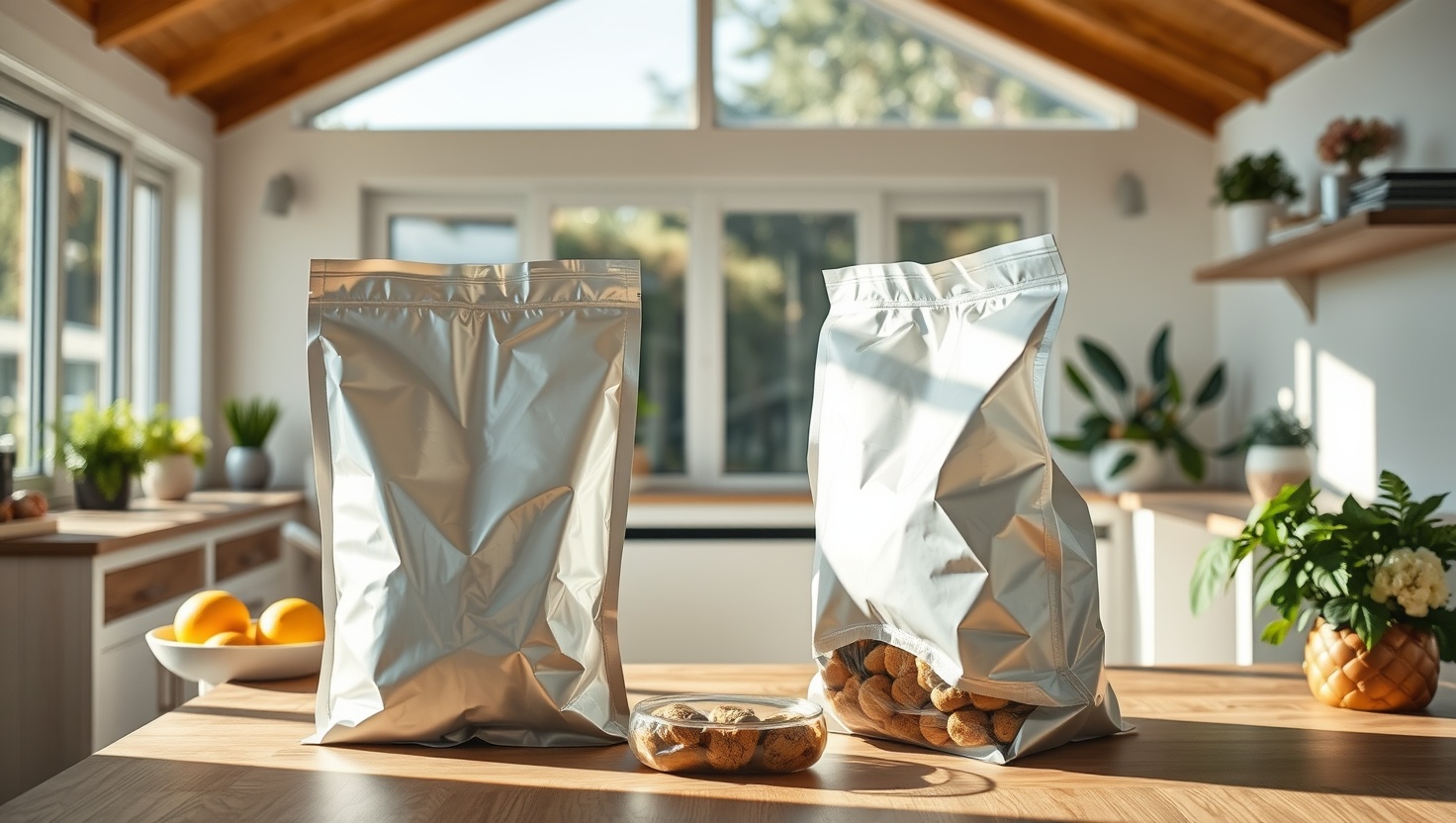
You have options when it comes to storing bulk food: plastic buckets, glass jars, vacuum-seal bags, even just the original packaging. Each has its place, but mylar bags outperform them all when it comes to long-term preservation of dry goods. Here is why.
ShieldPro 5-Gallon Mylar Bags with Oxygen Absorbers (10-pack) — Best Overall
ShieldPro has quietly become one of the most trusted names in the home food storage space, and this 5-gallon kit earns that reputation. Each bag is a true 5-mil thickness — not the 3.5-mil that some…
In a hurry? That’s our pick. Want the reasoning and the full comparison? Keep reading.
Oxygen is the enemy. It fuels oxidation (which makes fats go rancid and destroys vitamins), supports mold, and allows any dormant insect eggs in your grain to hatch. A good mylar bag — properly heat-sealed with an oxygen absorber inside — drops the oxygen level inside to below 0.1%. That is essentially an inert atmosphere. Nothing lives, nothing degrades, nothing hatches.
Light is the second enemy. UV and visible light break down vitamins and accelerate spoilage. The metallic, reflective layers in mylar film block light completely — unlike glass jars or translucent plastic containers.
Moisture is the third enemy. Even a small amount of humidity triggers mold and bacteria. The polyester film in mylar has an extremely low moisture vapor transmission rate, meaning it keeps the humidity outside where it belongs.
Plastic buckets and glass jars are excellent outer containers — and pairing them with mylar bags is actually the gold standard approach. Vacuum-seal bags made from clear plastic are great for short-term storage but do not block light, and the thin plastic is not as effective an oxygen barrier over decades. Mylar is in its own class for multi-year dry food storage.
How to Choose the Right Mylar Bags (Thickness, Size, Absorbers)
Thickness: The Most Important Spec
Mylar bag thickness is measured in mils (thousandths of an inch). The general rule is straightforward:
- 3.5-mil — acceptable for short-term storage (1–3 years), lower cost, more flexible
- 5-mil — the sweet spot for most food storage; handles 5–25+ years without issue
- 7.5-mil — heavy-duty, puncture-resistant, ideal for rough storage conditions or very long-term use
For anything you want to store seriously, go 5-mil minimum. The cost difference between 3.5-mil and 5-mil is usually just a few cents per bag — not worth skimping on.
Size: Match the Bag to the Food
Mylar bags come in sizes from small snack-sized pouches up to massive 5-gallon bags designed to hold an entire bucket's worth of grain. The most popular sizes for home food storage are:
- Quart (1 quart) — perfect for spices, seeds, small portions, or items you rotate frequently
- 1-gallon — works great for 5–6 lbs of rice or flour; manageable for regular access
- 5-gallon — bulk storage of 30–35 lbs of grain; fits perfectly inside a standard 5-gallon plastic bucket
Smaller bags are actually better for everyday use because you only open what you need. A 5-gallon bag exposed to air every time you scoop out a cup of rice will not last anywhere near as long as the same rice divided into 1-gallon portions.
Oxygen Absorbers: Get the Right Size
The number on an oxygen absorber (100cc, 300cc, 2000cc) refers to the cubic centimeters of oxygen it can absorb. Matching absorber size to bag size is important:
- Quart bags: 100–300cc absorber
- 1-gallon bags: 300–500cc absorber
- 5-gallon bags: 2000cc absorber (or two 1000cc absorbers)
Always use absorbers promptly once opened — they activate on contact with air and have a limited working window before they are saturated.
The 5 Best Mylar Bags for Long-Term Food Storage in 2026
ShieldPro has quietly become one of the most trusted names in the home food storage space, and this 5-gallon kit earns that reputation. Each bag is a true 5-mil thickness — not the 3.5-mil that some brands pass off as "5-mil" by measuring diagonally through the layers. The set includes ten bags plus a matched set of 2000cc oxygen absorbers, so you have everything you need to seal a full batch right out of the box.
What makes these stand out is the combination of reliable seal quality and practical bag dimensions. They fit snugly inside standard 5-gallon HDPE buckets (sold separately but widely available at hardware stores), which gives you a double layer of protection. The sealing area at the top is wide enough that even a basic clothes iron or flat hair straightener can create a solid seal — no dedicated food sealer required, though one is faster. For a family filling up their first serious pantry reserve with rice, lentils, oats, and flour, this is the one to start with.
Pros
- True 5-mil thickness — not inflated specs
- Includes 2000cc oxygen absorbers matched to bag size
- Fits standard 5-gallon buckets perfectly
- Wide seal area, works with iron or hair straightener
- Excellent price per bag for the quality
Cons
- 5-gallon is overkill if you are storing small quantities
- Buckets not included — add to your shopping list
- No ziplock — requires resealing equipment after opening
If you want to store a wide variety of foods in manageable portions rather than giant bulk bags, Wallaby's 1-gallon pack is exceptional value. Fifty bags plus sixty 300cc oxygen absorbers for $30 works out to under 60 cents per complete unit — bag and absorber included. The bags are 5-mil, the seals are consistent, and the 1-gallon size is genuinely versatile: it holds about 5–6 lbs of rice, a bag of pasta, a pound of dried beans, or a generous supply of spices and powdered goods.
The reason the 1-gallon size often makes more practical sense than going straight to 5-gallon is portioning. When you open a 1-gallon bag, you use it up relatively quickly — especially if you are rotating your pantry as you should be. A 5-gallon bag of oats sitting half-open for weeks is far less efficient than six 1-gallon bags you crack open one at a time. Wallaby's quality control is consistently strong, and their customer support has a solid reputation for replacing any bags with defects, which says a lot about how much they stand behind their product.
Pros
- Outstanding value — 50 bags + 60 absorbers for $30
- 1-gallon size is ideal for portioning and rotation
- True 5-mil construction
- Strong, consistent heat seal performance
- Great for variety — store 20 different foods at once
Cons
- 60 absorbers for 50 bags means you may run short if you add more bags later
- Slightly fewer absorbers than ideal if packing loosely filled bags
- Not ideal for bulk single-item storage (use 5-gallon for that)
Quart-sized mylar bags are the unsung heroes of pantry organization. PackFreshUSA's 100-pack gives you a massive supply of bags perfect for herbs, spices, seeds, baking mixes, small quantities of freeze-dried ingredients, or any food item where 1 gallon would simply be too much at once. At $22 for 100 bags, the math is excellent — you are paying 22 cents per bag for 5-mil construction that will keep your food protected for years.
These bags are particularly popular with people who meal-prep or want to pre-portion ingredients for specific recipes. Imagine having your chili spice blend, your pancake dry mix, or a measured portion of quinoa all pre-sealed and labeled — grab one bag, cook one meal, no guesswork. PackFreshUSA bags seal cleanly and consistently with both a dedicated bag sealer and a household iron. The one thing to note is that absorbers are not included in this pack, so pick up a box of 100cc or 300cc absorbers to go alongside it.
Pros
- 100 bags for $22 — incredible price per unit
- Perfect for herbs, spices, seeds, small portions
- 5-mil construction at a quart size
- Great for recipe pre-portioning and meal prep
- Clean, consistent seal area
Cons
- Oxygen absorbers sold separately — budget for these
- Quart size too small for bulk staples like rice or flour
- More labeling and sealing work with small individual bags
If you are storing food in a garage, barn, basement with temperature fluctuations, or anywhere that is not a perfectly climate-controlled environment, the extra investment in Dry-Packs' 7.5-mil heavy-duty bags is absolutely worth it. These are noticeably thicker and stiffer than standard 5-mil bags — you can feel the difference the moment you pull one out of the box. The 7.5-mil construction provides substantially more puncture resistance and a significantly better oxygen and moisture barrier, which matters when bags are handled frequently, stacked under weight, or stored in less-than-ideal conditions.
Dry-Packs has been in the food storage packaging business longer than most of the newer brands crowding Amazon, and it shows in the manufacturing consistency. Every bag in the pack will have the same thickness and the same clean, uniform gusset that allows it to stand up when filled. At $35 for 10 bags, you pay about $3.50 per bag — a dollar more than the ShieldPro — but for serious long-term storage where you absolutely cannot afford a failure, this is the insurance policy you want. Note that absorbers are not included, so add 2000cc absorbers to your cart.
Pros
- 7.5-mil construction — best puncture and barrier protection available
- Ideal for non-ideal storage environments (garage, basement)
- Consistent manufacturing quality from an established brand
- Stands upright when filled — easier to work with
- Maximum 25–30 year shelf life potential
Cons
- More expensive per bag than 5-mil options
- Oxygen absorbers not included
- Stiffer material requires a proper bag sealer for best results — iron works but takes more care
Ziplock mylar bags are a genuinely different product from heat-seal bags, and they solve a real problem: what happens when you want to access your stored food regularly without destroying a bag every time? IMPAK's 1-gallon ziplock mylar bags let you open and reseal without any tools — just press the two sides of the zipper closure together. They use the same multi-layer metallic polyester film as standard mylar bags, so the light and moisture protection is still excellent. The oxygen barrier is slightly less airtight than a heat seal over a decade, but for food you are rotating within 1–5 years they are a practical and flexible option.
These are particularly popular for daily-use pantry items — coffee, protein powder, brown sugar, oats for weekly use — where you want the protective benefits of mylar without committing to a permanent seal. They are also great for a "grab bag" emergency kit where someone needs to access food quickly without finding a sealer. At $20 for 25 bags, the cost per bag is very reasonable for a ziplock format. Just remember: for food you intend to store for 10+ years, use a heat seal. Ziplock mylar is a complement to, not a replacement for, traditional sealed bags.
Pros
- Open and reseal without any tools or equipment
- Great for frequently accessed pantry staples
- Still provides excellent light and moisture protection
- Affordable at $20 for 25 bags
- Perfect for a household new to mylar who wants flexibility
Cons
- Ziplock closure is less airtight than a heat seal over many years
- Not ideal for 10+ year storage — zipper can loosen over time
- Absorbers not included; use carefully (resealable means more air exposure)
How to Seal Mylar Bags Properly (Step-by-Step)
Buying the right bags is only half the equation. A poor seal is worse than no seal — it gives you false confidence while moisture and oxygen slowly get in. Here is how to seal your bags correctly every time.
- Gather your supplies. You need: filled mylar bags, oxygen absorbers (sized to your bag), a heat source (dedicated bag sealer, clothes iron, or flat hair straightener), and a hard, heat-safe surface like a wooden cutting board or ruler placed across the bucket opening.
- Fill the bag — but not too full. Leave at least 2–3 inches of clear space at the top of the bag. This is your seal zone. Overfilling is the most common mistake and leads to weak seals.
- Drop in the oxygen absorber — quickly. Once you open the package of absorbers, they start activating. Work in batches: open, insert into bag, seal. Do not leave absorbers sitting on the counter for more than 10–15 minutes.
- Flatten the seal area. Lay the top of the bag flat across your hard surface. Run your fingers across it to remove air pockets and make sure the two sides of the bag are flat and aligned.
- Apply heat evenly across the seal line. Run your sealer, iron, or straightener steadily and firmly from one end of the bag to the other. You are looking for a 3–5 second contact per inch. Do not rush. One slow, deliberate pass beats two rushed ones.
- Check your seal. Let the seal cool for 30 seconds, then press your hands firmly on the sides of the bag. You should feel resistance and see the bag stay firm. If it puffs back when you release, the absorber has not fully activated yet — wait 2–4 hours. If air is leaking in, you need to reseal.
- Label and store. Write the contents, fill date, and weight directly on the bag with a permanent marker. Store sealed bags inside plastic buckets, in a cool dark location below 70°F. Avoid concrete floors (moisture risk) — use shelving or pallets.
One common question: do you need a vacuum first? No. The oxygen absorber handles the oxygen removal — you do not need to vacuum-seal mylar bags. In fact, do not try to run mylar bags through a standard vacuum sealer, as the film can be too thick and you risk a poor seal. Mylar bags and vacuum bags are different products for different purposes.