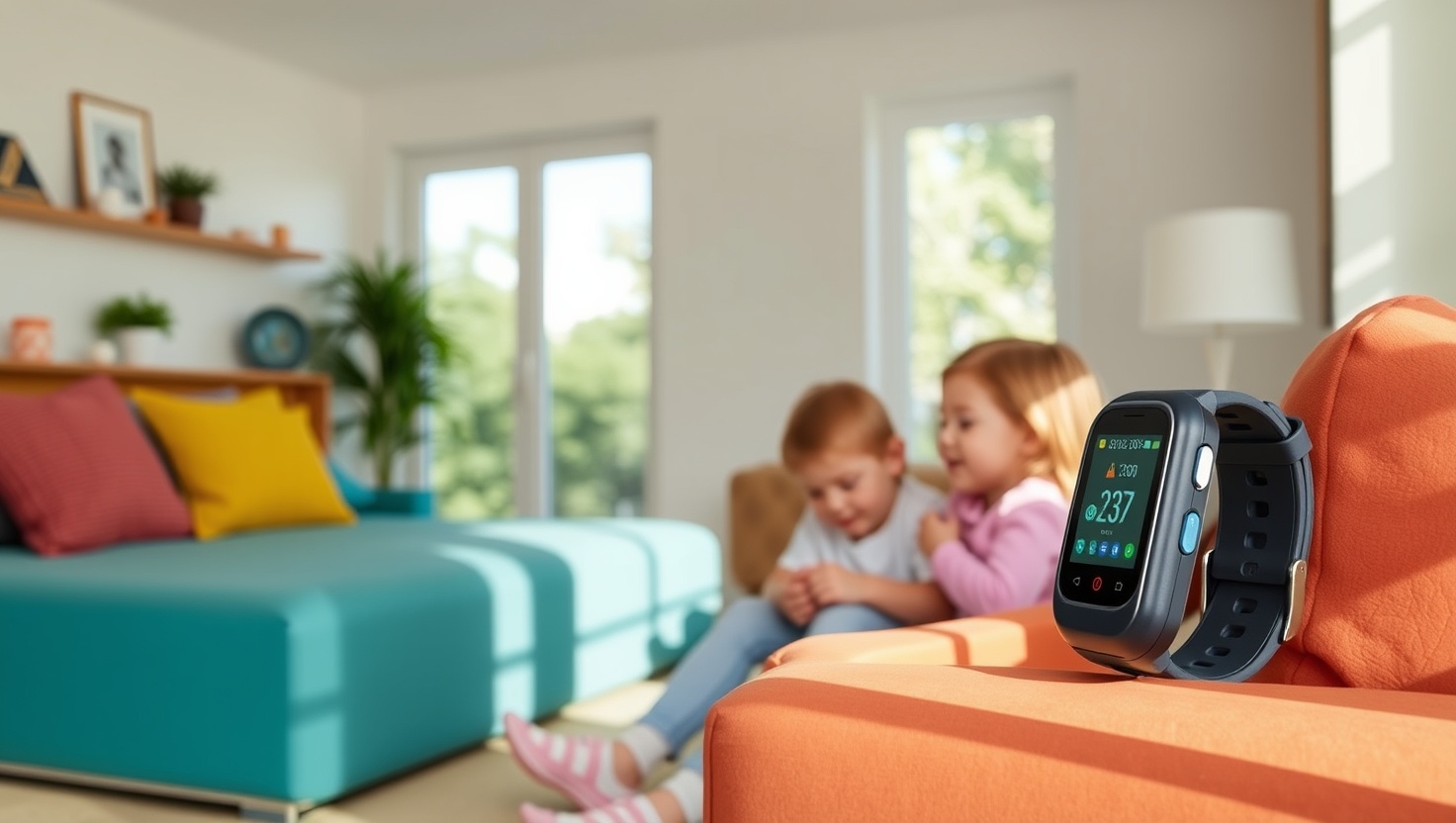
You want to know where your kids are. That's not overprotective — that's basic parenting. The problem is that the obvious solution (hand them a smartphone) comes loaded with everything you were trying to avoid: TikTok, Instagram DMs, group chats at midnight, and a dopamine machine disguised as a safety tool.
Jiobit Smart Tag — Best for Young Kids
The Jiobit is the tracker you reach for when your child is small, active, and completely indifferent to whether they're wearing a device or not. It's the size of a large button — small enough to clip…
In a hurry? That’s our pick. Want the reasoning and the full comparison? Keep reading.
Here's the thing nobody tells you: knowing where your kids are and giving them a smartphone are two completely different things. Dedicated GPS trackers solve the first problem without creating the second. No screen. No social media. No strangers. Just a signal that tells you your child is exactly where they're supposed to be.
We researched the best GPS trackers for kids in 2026 and ranked the top five options for families who want real-time peace of mind — without handing over a device that steals their child's attention. Whether you need something for a 4-year-old at preschool or a 12-year-old walking home from school, there's a tracker on this list built for that exact situation.
Key Takeaways
- Dedicated GPS trackers give you real-time location without giving your child internet access, social media, or a screen to get addicted to
- The best trackers combine GPS satellites, Wi-Fi positioning, and cellular triangulation for accuracy within 10-30 meters outdoors
- Most options require a monthly cellular plan ($9-$23/mo) — factor this into your total cost comparison
- For very young kids (3-8), clip-on trackers like the Jiobit are less intrusive and harder to lose than a watch
- The Apple AirTag 2 is the budget option, but it doesn't offer real-time GPS — better for backpacks than safety tracking
- AngelSense is the top pick for children with special needs — it's the only tracker designed specifically for that use case
GPS Tracker vs Smartwatch vs Smartphone — What's the Difference?
Before we get into the picks, it helps to understand what each device is actually built for. These aren't interchangeable — they serve different stages of childhood and different parenting needs.
| Device Type | Primary Use | Screen | Social Media | Best For |
|---|---|---|---|---|
| GPS Tracker | Location only (or location + calls) | None or minimal | No | Ages 3-10, maximum safety focus |
| Kids Smartwatch | GPS + calling + messaging | Small touchscreen | No | Ages 5-12, independence with guardrails |
| Smartphone | Everything | Full screen | Yes (unless blocked) | Teens 13+, with parental controls |
If your child is under 10 and you primarily want to know where they are, a GPS tracker is the cleanest solution. No screen means no distraction, no battery drained by games, and nothing for your kid to fiddle with during class. If you also want two-way calling, check out our guide to the best kids smartwatches in 2026 — they add calling and messaging on top of GPS without crossing into smartphone territory.
Quick Comparison: Top 5 GPS Trackers for Kids
| Device | Device Price | Monthly Cost | GPS Type | Best For |
|---|---|---|---|---|
| Jiobit Smart Tag | $130 | $9/mo | GPS + Cell + WiFi + BT | Young kids (3-8) |
| AngelSense | $69 (free promo) | $23-39/mo | GPS + Cell + WiFi | Special needs children |
| TickTalk 5 | $200 | $10/mo | GPS + Cell + WiFi | Older kids who want a watch |
| Tracki GPS | $20 | $20/mo | GPS + Cell + WiFi | Budget pick, worldwide coverage |
| Apple AirTag 2 | $29 | None | Bluetooth + UWB | Backpack/bag budget tracking |
1. Jiobit Smart Tag — Best for Young Kids (Ages 3-8)
Jiobit Smart Tag
The Jiobit is the tracker you reach for when your child is small, active, and completely indifferent to whether they're wearing a device or not. It's the size of a large button — small enough to clip onto a belt loop, backpack strap, shoelace, or jacket zipper without getting in the way. Your 4-year-old won't even notice it's there. That's exactly the point.
What makes Jiobit stand out technically is the multi-network approach. It doesn't just use GPS — it simultaneously leverages cellular, Wi-Fi, and Bluetooth to triangulate location with impressive accuracy. Indoors, outdoors, at the grocery store, in a crowded school hallway — the Jiobit finds a signal. The companion app is clean and fast, with real-time map updates and customizable geofences.
Trusted Tethering is Jiobit's signature feature: if your child moves more than a set distance from a trusted device (your phone, a grandparent's phone), you get an instant alert. It's the difference between a passive tracker and an active safety system. The device is also IP67 waterproof, so a jump through a sprinkler isn't a crisis.
Price: $130 | Monthly plan: $9/mo | Best for: Ages 3-8
Pros
- Tiny and lightweight — clips anywhere
- GPS + cellular + WiFi + Bluetooth coverage
- No screen = no distraction
- Trusted Tethering proximity alerts
- IP67 waterproof
- Affordable monthly plan at $9/mo
Cons
- No SOS button (child can't call for help)
- Battery needs daily charging
- Higher upfront cost than Tracki
- No two-way communication
Who it's for: Parents of young children who want the most reliable location tracking possible without any screen or complexity. Perfect for preschool drop-offs, theme parks, or any situation where your small child needs to be findable fast.
Check Jiobit Price →2. AngelSense GPS Tracker — Best Safety Features
AngelSense GPS Tracker
AngelSense was built for one specific purpose: keeping children with autism, ADHD, Down syndrome, and other special needs safe when they're away from their primary caregiver. It shows. Every feature in the AngelSense ecosystem reflects the reality that these children may wander, may not be able to communicate in an emergency, and may need a level of real-time oversight that standard trackers don't provide.
The Listen-In feature is the one that gets parents emotional. You can open the AngelSense app and listen to what's happening around your child in real time — whether they're distressed, whether a caregiver is speaking to them appropriately, whether something sounds wrong. It's not about surveillance — it's about being there when you physically can't be. Auto-Answer lets you call the device and have it answer automatically without anyone pressing a button, which is critical for children who may not understand what "answer the phone" means.
The SOS button sends simultaneous alerts to multiple emergency contacts with GPS coordinates. And the tracker includes a tamper-proof design — certain models have a special lock mechanism so the child can't remove it without a parent tool. For families who need that level of security, nothing else on this list comes close.
Price: $69 (free for first-time users during promo) | Monthly plan: $23-39/mo | Best for: Children with special needs, any age
Pros
- Designed specifically for special needs children
- Listen-In and Auto-Answer features
- SOS alerts to multiple contacts simultaneously
- Tamper-proof design option
- Detailed schedule tracking and routine mapping
- Excellent customer support for families
Cons
- Highest monthly cost ($23-39/mo)
- Listen-In could feel invasive in some contexts
- Interface requires learning curve
- Bulkier than Jiobit
Who it's for: Families of children with special needs who need the most comprehensive safety monitoring available. Also worth considering for any family in a situation requiring elevated safety awareness — a child prone to wandering, a complex school commute, or a child with anxiety about emergencies.
Check AngelSense Price →3. TickTalk 5 — Best for Older Kids Who Want a Watch
TickTalk 5
At some point your child will refuse to wear a clip-on tracker. They're not a toddler anymore — they want something that doesn't scream "my parents are tracking me." The TickTalk 5 solves this elegantly: it's a proper smartwatch with an AMOLED screen, video calling, and GPS tracking. It looks like something a kid actually wants to wear. But everything it does is controlled by you.
The TickTalk 5 handles GPS tracking, two-way video and voice calling, SOS alerts, geofencing, and messaging — all routed through parent-approved contacts only. There's no app store, no social media, no internet browser. Your child gets the independence of a connected device; you get the safety of a closed system. The AMOLED screen is bright and responsive, and the companion app is one of the best in the kids-device category.
School mode silences the watch automatically during class hours. You set the schedule, the watch enforces it — no arguments, no "but I just need to check one thing." The TickTalk 5 is the natural upgrade path from a clip-on tracker when your child wants more capability and you want them to actually wear the device every day.
Price: $200 | Monthly plan: ~$10/mo | Best for: Ages 8-13 who want a watch, not a hidden tracker
Pros
- AMOLED screen — looks like a real smartwatch
- Two-way video calling with approved contacts
- SOS button with GPS coordinates
- School mode silences automatically
- No internet, no social media, no app store
- Strong companion app for parents
Cons
- Most expensive device on this list ($200)
- Screen may distract younger kids
- Battery life around 2 days with active use
- Camera may not be allowed in all schools
Who it's for: Parents of kids aged 8-13 who want GPS and calling without a smartphone — and whose children are old enough to appreciate wearing a proper watch. Also the ideal option if you're transitioning away from a clip-on tracker and want something your child is excited to wear.
Check TickTalk 5 Price →4. Tracki GPS Tracker — Most Affordable, Worldwide Coverage
Tracki GPS Tracker
The Tracki is the tracker for families who want real-time GPS without spending $130 on the device itself. At $20 for the hardware, it's dramatically cheaper than every other option on this list. You'll pay more on the monthly plan ($20/mo) — but over a year, the total cost is still competitive with the Jiobit.
What you get for that price is genuinely impressive: real-time GPS tracking every 60 seconds, geofencing with instant alerts, location history, and worldwide coverage across 190 countries. That last point matters more than you'd think — if you travel internationally, most kids trackers simply stop working the moment you cross a border. Tracki doesn't have that problem.
The device is about the size of a large matchbox and attaches via a clip or can be slipped into a backpack pocket. It's not as polished as the Jiobit and the app isn't quite as refined, but it does the core job — tell you where your child is, right now — reliably and affordably.
Price: $20 | Monthly plan: $20/mo | Best for: Budget-conscious families, frequent international travelers
Pros
- Lowest device price at $20
- Works in 190 countries worldwide
- Real-time tracking every 60 seconds
- Geofencing with instant alerts
- Location history log
Cons
- Monthly plan is relatively expensive ($20/mo)
- No SOS button
- No two-way communication
- App less polished than Jiobit or AngelSense
- Battery needs charging every 2-3 days
Who it's for: Families who need reliable real-time GPS on a budget, or who travel internationally and need a tracker that works everywhere. Also useful as a secondary tracker alongside another device — slide it into a backpack for a backup location signal.
Check Tracki Price →5. Apple AirTag 2 — Best Budget Option for Backpack Tracking
Apple AirTag 2
Let's be clear about what the Apple AirTag 2 is and isn't. It is not a real-time GPS tracker. It does not transmit live location. It has no SOS button, no geofencing alerts, no cellular connection. What it is: a $29 Bluetooth tag that uses Apple's massive Find My network — hundreds of millions of iPhones acting as passive detectors — to help you locate a lost item within range of any Apple device.
For a backpack, lunchbox, or jacket pocket, that's genuinely useful. If your child leaves their bag at the park, you can pinpoint it within a few meters using Precision Finding on an iPhone. The AirTag 2 has improved range and a longer battery life than the original, and the UWB chip makes precision location more accurate than ever when you're nearby.
But don't confuse this with child safety tracking. If your child is in trouble across town, an AirTag gives you nothing. The location only updates passively when another Apple device walks past. In a suburban school commute, that might be frequent enough to feel like tracking — but it's not reliable enough to count on in an emergency. Use it for bags and belongings. Use something else for your child.
Price: $29 | Monthly plan: None | Best for: Backpacks, bags, and lost items — not primary child tracking
Pros
- Cheapest option at $29
- No monthly subscription
- Excellent for locating lost bags or gear
- Precision Finding with UWB chip
- Long battery life (1+ year on CR2032)
- Seamless Apple ecosystem integration
Cons
- No real-time GPS — passive location only
- No SOS or emergency alerts
- Requires iPhone to use (Android limited)
- Not reliable enough for actual child safety
- Anti-stalking alerts may notify others nearby
Who it's for: iPhone families who want a cheap way to track bags, jackets, or sports gear. Pair it with a real GPS tracker for your child — don't use it as a replacement. Also useful as a budget backup that slides into a backpack alongside a Jiobit or Tracki.
Check Apple AirTag 2 Price →How to Choose the Right GPS Tracker for Your Child
Five options, different price points, different strengths. Here's how to think through the decision without getting lost in spec sheets.
Age of Your Child
For very young children (3-7), choose a clip-on tracker with no screen — something they can't fiddle with or break. The Jiobit is purpose-built for this age. For children 8 and up who want to feel more independent, the TickTalk 5's watch format is far more likely to actually stay on their wrist every day. A device that sits in a drawer because your kid thinks it's "babyish" gives you zero safety benefit.
Real-Time GPS vs Proximity Tracking
If you need to know exactly where your child is right now — school commute, after-school activities, a complicated custody arrangement — you need real-time GPS with a cellular connection. The Jiobit, AngelSense, TickTalk 5, and Tracki all deliver this. The AirTag 2 does not. Know what you're buying before you buy it.
Subscription Costs Over Time
The device price is only part of the story. A Tracki at $20 sounds cheap until you factor in $240/year in plan costs. A Jiobit at $130 costs $108/year on its $9/month plan — cheaper annually than the Tracki despite the higher upfront price. Run the math over 2-3 years before deciding based on sticker price alone.
Battery Life
GPS and cellular radios drain batteries fast. Most trackers last 1-3 days per charge. Build charging into your family's evening routine and it stops being an issue. What you want to avoid is a dead tracker on a day your child has an unusual schedule. The AirTag 2's year-plus battery life is its single biggest practical advantage for busy families.
Special Needs Considerations
If your child has autism, sensory processing issues, or any condition that increases wandering risk, skip the general-market options and go straight to AngelSense. It's the only tracker built specifically for this situation, and the Listen-In and Auto-Answer features aren't available anywhere else at this level of reliability.
Privacy Considerations
GPS trackers for children raise legitimate privacy questions — and it's worth thinking through them before you buy.
Who can see the location data? Every tracker on this list stores location data on company servers. Read the privacy policy of any device you're considering. Look for end-to-end encryption, clear data retention policies, and explicit statements that location data is never sold to third parties. Jiobit and AngelSense both have strong privacy track records in this regard.
At what age does tracking become controlling? A tracker on a 5-year-old is unambiguously protective. A tracker on a 15-year-old is a different conversation. As your child grows, involve them in the discussion. Explain why you're tracking and what it's for. Kids who understand the safety rationale cooperate far better than kids who feel surveilled. By the teen years, apps like Bark offer a better model — monitoring for safety without constant location broadcasting.
Anti-stalking protections: The Apple AirTag 2 has built-in anti-stalking alerts — it will notify nearby iPhones if an unknown AirTag has been traveling with them. This is important for safety in adult contexts, but it means an AirTag in your child's backpack might occasionally alert people nearby. Dedicated kids trackers don't have this issue because they transmit to your app, not the public Find My network.
Need the Full Picture on Kid-Safe Devices?
GPS trackers are one piece of the puzzle. For older kids who need calling and messaging without a smartphone, see how kids smartwatches compare. And when the smartphone conversation becomes inevitable, parental control apps like Bark and Qustodio add a critical safety layer.
Our Top Pick: Jiobit Smart Tag →Or see the TickTalk 5 GPS Watch
Related Reading
GPS trackers give you peace of mind about where your child is. But knowing where they are is only part of family safety in the digital age. Here's what to read next:
- Best Kids Smartwatches 2026 — GPS + calling without a smartphone, for kids aged 5-12
- Best Parental Control Apps 2026 — When the smartphone conversation happens, these apps make it safer
- Wait Until 8th: The Parent's Guide — Why delaying smartphones until middle school changes everything
- How to Help a Teenager With Phone Addiction — Practical steps that actually work, without starting a war
Frequently Asked Questions
Yes. Dedicated GPS trackers are far safer than smartphones because they transmit location data to parents only, have no internet access, and cannot connect to social media or strangers. The main consideration is data privacy — choose a reputable brand with a clear privacy policy and encrypted location data. The trackers on our list all meet that bar.
Most dedicated GPS trackers use cellular networks to transmit location data — so the tracker itself doesn't need a phone, but you need a smartphone to view the location through the companion app. The Apple AirTag 2 is an exception: it works via Bluetooth and Apple's Find My network without a cellular plan, but requires an iPhone to check location.
Cellular GPS trackers like the Jiobit and AngelSense are accurate to within 10-30 meters outdoors using a combination of GPS satellites, Wi-Fi positioning, and cellular triangulation. Indoor accuracy drops somewhat since GPS signals weaken inside buildings, but geofence alerts remain reliable. Bluetooth trackers like the Apple AirTag 2 are less reliable for real-time tracking and work best for finding a lost item nearby.
For real child safety, a dedicated GPS tracker wins every time. The Apple AirTag 2 uses Bluetooth and passive crowd-sourcing — it doesn't transmit live location, can't send SOS alerts, and has no geofencing. It's great for a backpack or lunchbox when you just need to locate a lost item, not for tracking a child's whereabouts in real time. Trackers like the Jiobit or AngelSense offer live GPS, SOS alerts, geofencing, and listen-in features the AirTag simply can't match.
GPS trackers are most useful from about age 3 onwards, whenever your child starts spending time away from you — preschool, playdates, visiting grandparents. Clip-on trackers like the Jiobit suit very young children well. As kids get older (8-12), a GPS watch like the TickTalk 5 adds two-way calling while keeping the same parental controls. By the teen years, most families transition to a monitored phone with apps like Bark or Qustodio.