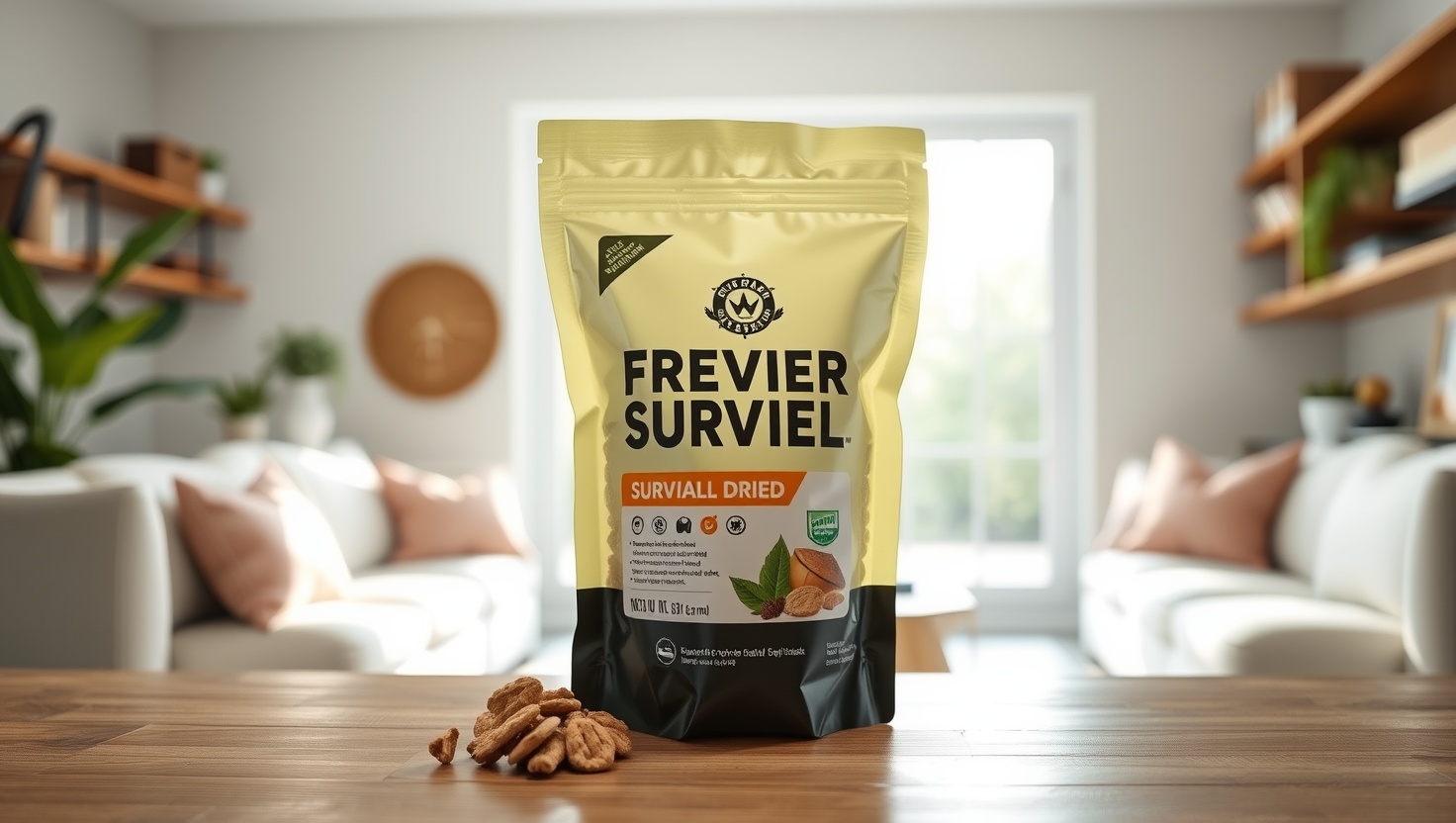
Mountain House — Our Top Recommendation
Mountain House has been making freeze-dried meals since 1969. Originally developed for military rations and mountaineers, their food genuinely tastes good — not "good for emergency food," but…
In a hurry? That’s our pick. Want the reasoning and the full comparison? Keep reading.
Emergency food kits are a $4 billion industry built on a simple fear: what happens when the grocery stores close? The problem is that fear sells well, and too many brands exploit it with misleading serving counts, calorie-thin meal plans, and buckets padded with drink mixes to inflate the numbers.
We cut through the marketing. For this guide, we evaluated the top freeze-dried food brands on what actually matters: real calories per day, actual taste, ingredient quality, honest cost per meal, and verified shelf life. Not serving counts. Not bucket size. Not apocalypse branding.
If you are building your first emergency food supply — or upgrading a mediocre one — here are the five brands worth your money in 2026, and the storage mistakes that destroy even the best food long before its expiration date.
Key Takeaways
- Mountain House leads on taste and rehydration quality — the gold standard if budget allows
- Augason Farms offers the best value per calorie for large families building bulk supply
- Always calculate real calories per day, not marketed "servings" — many kits only deliver 800-1,200 cal/day
- Store below 75°F in a cool, dark space. Garage storage in hot climates can cut shelf life in half
- Build a hybrid supply: bucket kits for baseline, individual cans for protein and variety
- The 4 shelf-life killers: heat, moisture, oxygen, and light. Control all four or your investment rots
How We Evaluated These Brands
Every freeze-dried food brand looks great on the label. The real test is what happens when you open the can, add water, and try to feed your family. We rated each brand on five factors:
- Real calorie density — total calories divided by days of supply. Many "30-day" kits only provide 1,000-1,200 cal/day.
- Taste and rehydration quality — does it taste like food or like regret?
- Ingredient quality — real ingredients vs fillers, MSG, and excessive sodium
- Honest cost per meal — price divided by actual full-size meals, not marketing servings
- Shelf life and packaging quality — nitrogen-flushed cans vs mylar pouches, verified storage conditions
The 5 Best Freeze-Dried Food Brands for 2026
| Brand | Best For | Cal/Day* | Cost/Meal | Shelf Life |
|---|---|---|---|---|
| Mountain House | Taste & quality | 1,800-2,000 | $10-15 | 30 years |
| Augason Farms | Budget bulk supply | 1,400-1,800 | $4-7 | 25 years |
| Heaven's Harvest | Real entrees | 1,600-2,000 | $8-12 | 25 years |
| Nutristore | Individual ingredients | Varies | $5-10 | 25 years |
| ReadyWise | Quick starter kits | 1,000-1,400 | $6-9 | 25 years |
*Calories per day based on "30-day" kit configurations. Actual daily nutrition varies by specific kit purchased.
Mountain House — Best Overall Taste
Mountain House has been making freeze-dried meals since 1969. Originally developed for military rations and mountaineers, their food genuinely tastes good — not "good for emergency food," but actually enjoyable. The Beef Stroganoff, Chicken Teriyaki, and Breakfast Skillet are meals you would eat by choice. Rehydration is consistently the best in the industry — add hot water, wait 10 minutes, and the texture is remarkably close to fresh-cooked.
Pros
- Best taste in the industry — real food quality
- 30-year verified shelf life in #10 cans
- No artificial flavors or colors
- Excellent rehydration consistency
Cons
- Most expensive per meal ($10-15)
- Some meals are high in sodium (700-900mg)
- Limited vegetarian/vegan options
We earn a commission on purchases — at no extra cost to you.
Augason Farms — Best Value Per Calorie
Augason Farms dominates the budget category. Their individual ingredient cans (freeze-dried chicken, scrambled eggs, fruits, vegetables) let you build a customized supply at roughly half the cost of Mountain House. The 30-day emergency pail ($100-130) is one of the most popular entry points, though the calorie count runs lower than advertised. Best strategy: buy Augason individual cans and cook real meals rather than relying on their pre-mixed entrees.
Pros
- Best price-to-calorie ratio in the market
- Huge variety of individual ingredients
- Available at Walmart, Amazon, and direct
- Good for building customized supplies
Cons
- Pre-mixed entrees are less impressive than Mountain House
- Some products are dehydrated, not freeze-dried
- 30-day pail calorie count is below 2,000/day
We earn a commission on purchases — at no extra cost to you.
Heaven's Harvest — Best Real Entrees
Heaven's Harvest stands out by focusing on actual meals instead of padding kits with drink mixes and instant oatmeal. Their entree buckets contain real dishes like Creamy Chicken Pasta, Beef Chili, and Hearty Stew — food that feels like a meal, not a survival ration. Calorie counts are honest and clearly labeled per bucket. The brand has built a strong reputation in the prepper community for transparency.
Pros
- Real entrees — no drink mix padding
- Transparent calorie and nutrition labeling
- Good balance of taste and price
- Growing variety of meal options
Cons
- Smaller brand — less store availability
- Bucket packaging (not #10 cans)
- Limited individual ingredient options
We earn a commission on purchases — at no extra cost to you.
Nutristore — Best Individual Ingredients
Nutristore shines when you want to build your own supply from individual ingredients rather than pre-made meals. Their freeze-dried chicken, ground beef, fruits, and vegetables are high quality and versatile. Buy what your family actually eats and prepare it your way. The canned chicken is particularly good — it rehydrates well and tastes close to fresh. Available at Costco and Amazon.
Pros
- Excellent individual ingredient quality
- Available at Costco (bulk pricing)
- True freeze-dried (not dehydrated)
- Cook meals your family actually likes
Cons
- Requires cooking skills and additional staples
- No grab-and-go convenience
- Higher cost when building full meal equivalents
We earn a commission on purchases — at no extra cost to you.
The 5 Storage Mistakes That Destroy Your Emergency Food
1. Storing in the Garage
The most common mistake. Garages in most climates hit 90-110°F in summer. Every 10°F above 75°F roughly halves the effective shelf life. A "25-year" can stored at 90°F may only last 8-12 years. Store food in a temperature-stable interior space: basement, closet, under-bed storage. Anywhere that stays below 75°F year-round.
2. Trusting the Serving Count
A "30-day supply with 1,800 servings" sounds impressive until you realize each "serving" is 200 calories. Do the math: 1,800 servings × 200 cal = 360,000 total calories ÷ 30 days = 12,000 cal/day for... six people, not one. Always calculate: total calories ÷ days ÷ people = actual calories per person per day. You need at least 1,800-2,000.
3. Only Buying Entrees
Pre-made entrees are convenient but nutritionally incomplete. Most lack adequate fruits, vegetables, fats, and variety. Build a 75/25 supply: 75% individual ingredients (proteins, grains, fruits, vegetables, cooking oils) and 25% ready-to-eat entrees for convenience and morale. Add peanut butter, cooking oil, honey, and spice packets — they store well and make everything better.
4. Opening Cans "To Try"
Once a sealed #10 can is opened, the clock starts. Freeze-dried food rapidly absorbs ambient moisture. An opened can of freeze-dried chicken that sits in a humid kitchen for a month can develop off flavors and eventually mold. If you want to taste-test (and you should), buy separate single-serving pouches for testing and leave your long-term cans sealed.
5. Storing Food Without Water
Freeze-dried food requires water to prepare — typically 1-2 cups per meal. A 30-day food supply for a family of four needs approximately 60-90 gallons of water just for food preparation, on top of the 1 gallon per person per day for drinking. Store water alongside food, or invest in a reliable water filtration system.
Building Your First 30-Day Supply: A Budget Framework
For a family of four, here is a realistic 30-day supply built on honest calorie counts:
| Category | What to Buy | Approx Cost |
|---|---|---|
| Baseline entrees | 2x ReadyWise 30-day buckets | $200-250 |
| Protein boost | 4x Nutristore chicken + 2x beef cans | $150-200 |
| Fruits & vegetables | 6x Augason Farms fruit + veggie cans | $80-120 |
| Breakfast | 2x Mountain House breakfast bucket | $60-80 |
| Comfort & morale | Peanut butter, honey, coffee, spices | $30-50 |
| Water (60-90 gal) | WaterBOB + stored jugs + filter | $50-80 |
| Total | $570-780 |
That works out to roughly $4.75-6.50 per person per day — less than a single fast food meal. And it lasts 25 years.
Building your emergency supply?
Food is just one piece. Make sure your water and power plans are solid too.
30-Day Food Supply Guide Water Storage GuideFrequently Asked Questions
Get practical preparedness guides in your inbox
One email per week. No spam, no fluff — just honest advice on being ready for anything.