Your tap water has a story, and it's not one you want to read before bed. The EPA has identified over 320 contaminants in US drinking water — only 90 are legally regulated. PFAS (so-called "forever chemicals") now show up in the tap water of 200+ million Americans. Fluoride, chlorine byproducts, microplastics, heavy metals. The list goes on.
Here's the good news: you don't need to rely on a municipality to clean your water. A countertop water distiller gives you complete control over what goes into every glass. No filter subscriptions, no infrastructure dependency, no guessing. You boil the water, the steam rises, the contaminants stay behind, and you collect pure H₂O on the other side. That's it. It's the oldest, simplest, most proven water purification technology on the planet — and it works better than almost anything else.
We've ranked the best countertop water distillers of 2026 across five price points — from a $60 entry-level option to a USA-made unit built to outlast your mortgage. Here's what actually works.
Key Takeaways
- Distillation removes 99.9%+ of contaminants including PFAS, fluoride, heavy metals, bacteria, viruses, and microplastics
- All-stainless steel construction matters — avoid plastic parts that contact hot water or steam
- Activated carbon post-filters are essential to catch any volatile organic compounds (VOCs) that co-evaporate
- Cost per gallon runs $0.45–0.75 in electricity — cheaper than bottled water within months
- Output speed is 1 gallon per 4–6 hours — plan ahead or buy a second unit for high-demand households
- The Megahome MH943SBS is our top pick for most people; the Pure Water Mini-Classic CT is the forever investment
Why Distilled Water Is the Gold Standard (And What It Actually Removes)
Filtration catches some things. Reverse osmosis catches more. Distillation catches almost everything.
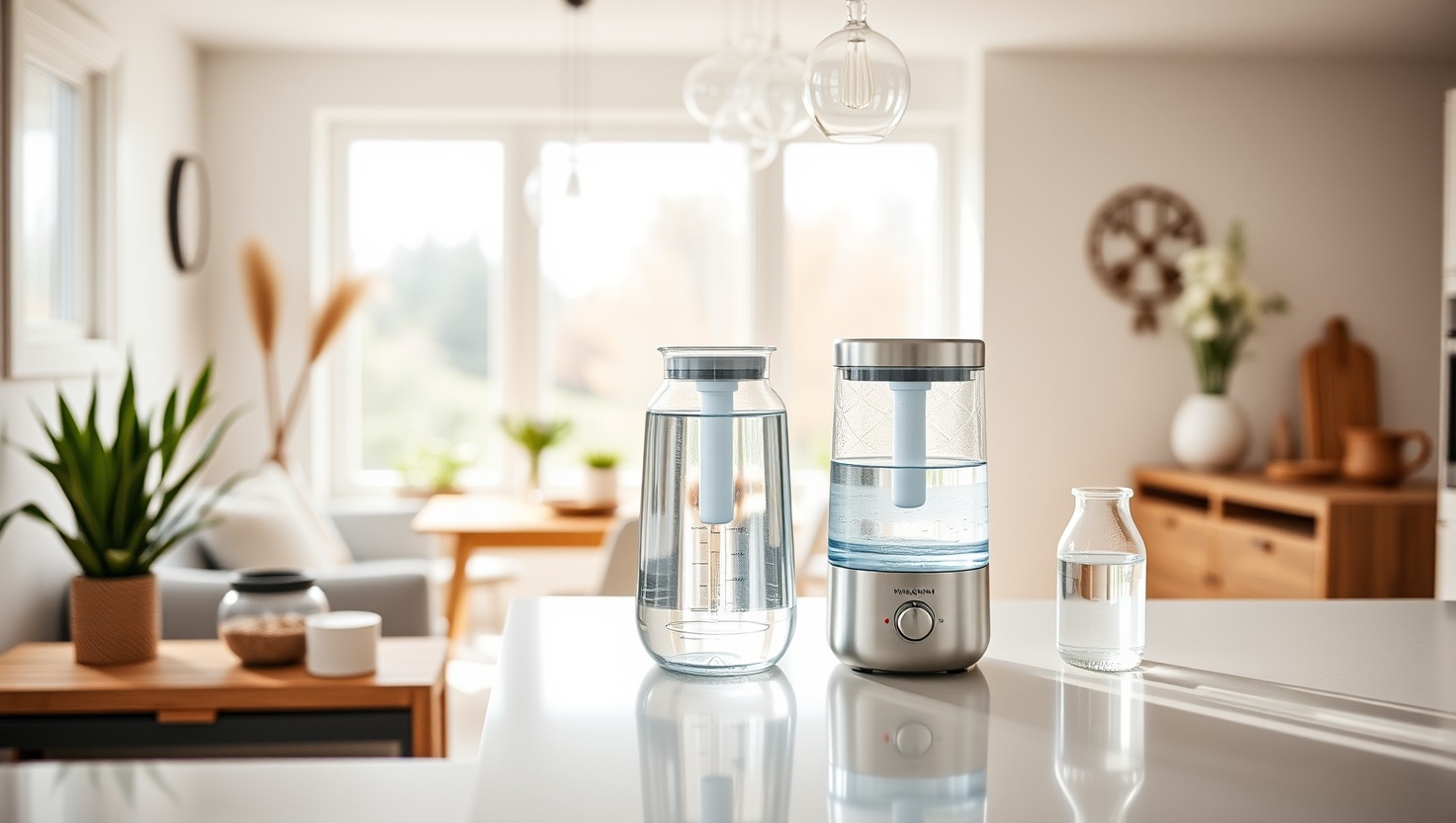
When you heat water to boiling, pure H₂O molecules vaporize and rise as steam. Contaminants — which have higher boiling points or don't evaporate at all — stay behind in the boiling chamber. That steam then passes through a cooling coil, condenses back into liquid, and drips into your collection bottle as near-pure water.
What gets left behind? Heavy metals (lead, arsenic, mercury, cadmium). Fluoride. Nitrates. Bacteria and viruses. Microplastics. PFAS "forever chemicals." Dissolved solids of all kinds. The CDC, EPA, and NSF all recognize distillation as one of the most effective methods for producing pure drinking water.
The one nuance: volatile organic compounds (VOCs) have lower boiling points than water, so they can technically carry over with the steam. This is why every serious distiller includes an activated carbon post-filter in the collection bottle — it intercepts any VOCs before they reach your glass. With the carbon filter in place, you're getting water that most labs would be proud to use.
Read the Emergency Water Filter Guide →
Distiller vs. Filter vs. Reverse Osmosis: Which One Do You Need?
Each approach has its place. Here's the honest breakdown:
Standard filters (pitchers, faucet attachments): Good for chlorine and taste. Not designed for heavy metals, PFAS, or fluoride. Easy and cheap, but limited.
Reverse osmosis (RO): Excellent performance — removes 90–99% of most contaminants. Requires installation, wastes 3–4 gallons of water per gallon produced, membranes need replacing, and performance degrades over time if not maintained. Great option but requires infrastructure.
Distillation: No installation required. No plumbing. No membrane degradation. Works on any water source. Performance doesn't decline — boiling point physics doesn't change. Slower than RO but completely self-contained. You plug it in, pour water in, walk away.
For someone who wants pure water independence — no plumber, no under-sink system, no ongoing maintenance complexity — distillation wins. It's the most bulletproof approach available at the countertop level.
Read the PFAS Filter Guide →
1. Megahome MH943SBS Stainless Steel Distiller — Best Overall
The Megahome MH943SBS has been the benchmark countertop distiller for over a decade, and the 2026 version continues to earn that reputation. All-stainless steel construction means no plastic ever touches your water or steam. The included glass collection carafe is the only way to collect distilled water without risking off-gassing from plastic containers. UL listed, reliable, and proven by tens of thousands of households — this is the one we'd recommend to almost everyone.
Pros
- All stainless steel — no plastic water contact
- Glass collection bottle (no plastic leaching)
- Activated carbon post-filter included
- Removes 99.9% of contaminants
- 1 gallon per ~5.5 hour cycle
- UL listed safety certification
- Easy to clean and maintain
Cons
- One gallon per cycle — plan ahead
- Draws ~800W while running
- Heats up the kitchen noticeably
- Glass carafe can break if dropped
- No notification when cycle completes
2. Pure Water Mini-Classic CT — Best American-Made
If you're thinking in decades — not months — the Pure Water Mini-Classic CT is the unit you buy once and never replace. Made entirely in the USA from American materials, with zero plastic anywhere in the water pathway, and backed by a 15-year warranty that the company actually honors. This is the kind of gear that shows up in medical labs and survival homesteads alike, because when you absolutely need clean water, compromises aren't acceptable.
Pros
- 100% USA-made, all-American materials
- Zero plastic anywhere in water path
- 0.8 gallons per ~4 hour cycle
- Activated carbon post-filter
- 15-year manufacturer warranty
- Medical and lab-grade purity
- Built to last decades, not years
Cons
- Most expensive option on this list
- Slower output relative to price
- Large countertop footprint
- Stainless collector (no glass option)
- Premium investment — not for casual buyers
3. CO-Z 4L Stainless Steel Distiller — Best Value
At $80, the CO-Z 4L punches well above its price class. The 304 stainless steel body handles the boiling chamber properly, the included glass collection jug avoids plastic leaching, and the auto-shutoff feature means you can actually walk away without babysitting it. If you're new to distillation and want to verify it works for your household before committing to a $200+ unit, this is the smartest way to start.
Pros
- 4-liter (1 gallon) capacity
- 304 stainless steel body
- Glass collection jug included
- Activated carbon filters included
- Auto shutoff when cycle completes
- Compact, fits most counters
- Outstanding value for the price
Cons
- Some internal plastic components
- Shorter lifespan than premium models
- Carbon filters need regular replacement
- Fan is noticeably louder
4. H2O Labs Model 200 — Most Reliable
The H2O Labs Model 200 sits in the sweet spot between the value CO-Z and the premium Megahome. The 304 stainless boiling chamber combined with a glass collector gives you clean water contact throughout, and the porcelain-lined stainless nozzle is a thoughtful touch that prevents any metallic taste crossover. It ships with a six-pack of carbon filters so you're covered for months out of the box. Consistent batch after batch — that's the reputation this unit has built.
Pros
- 304 stainless steel with glass collector
- Porcelain-lined stainless nozzle
- 1 gallon per cycle output
- Includes 6-pack of carbon filters
- Consistent results cycle after cycle
- Solid customer support
Cons
- Mid-range price with similar output speed
- Plastic fan housing
- No smart features or notifications
- Replacement filters are ongoing cost
5. VEVOR 1.1 Gallon Water Distiller — Best Budget
Sixty dollars for a working water distiller sounds impossible, but VEVOR has built a reputation for functional budget gear, and their countertop distiller holds up its end of the bargain. The 304 stainless steel body handles the boiling chamber properly, the 1.1-gallon capacity produces slightly more than a standard gallon per run, and the auto-shutoff keeps things safe. Yes, there's plastic in the lid. Yes, it's louder than premium models. But if you need pure water on a tight budget, this is your entry point.
Pros
- Most affordable option ($60)
- 750W efficient power draw
- 304 stainless steel body
- 1.1 gallon capacity per cycle
- Auto shutoff included
- Activated carbon filter included
- Solid build quality for the price
Cons
- Plastic components in the lid
- Noisier operation
- Less durable for long-term use
- Smaller community and support network
- Carbon filters need frequent replacement
How to Use a Water Distiller: The Complete Process
Using a countertop distiller is genuinely simple. Here's the full process:
Step 1: Fill the boiling chamber. Pour tap water (or well water, or even rainwater) into the stainless boiling chamber up to the fill line. Most units hold 1 gallon.
Step 2: Insert the carbon filter. Place the activated carbon filter sachet into the collection bottle or the nozzle, depending on your model. This catches any VOCs that carry over.
Step 3: Attach the collection bottle and lid. Secure the glass or stainless collection vessel under the output nozzle. Make sure it's positioned correctly so condensed water drips in cleanly.
Step 4: Plug in and press start. That's it. Most units have a single power button. The heating element activates, water comes to a boil, steam rises through the distillation column, cools in the condensing coil, and drips as pure water into your collection bottle.
Step 5: Wait 4–6 hours. Go to work. Go to sleep. Come back to a full gallon of pure water. Many people run their distiller overnight as part of a routine.
Step 6: Clean the boiling chamber. After each use (or every few uses for softer water), white mineral deposits will accumulate in the boiling chamber. A quick soak with citric acid powder and water dissolves them completely. Takes about two minutes of actual effort.
Read the Whole House Water Filter Guide →
The Hidden Cost: Electricity, Filters, and Long-Term Value
Let's be honest about the numbers. A distiller is not zero-cost to run. Here's what you're actually spending:
Electricity: Most distillers draw 750–800 watts and run for 4–6 hours per gallon. At the 2026 US average electricity rate of ~$0.16 per kWh, one gallon costs you roughly $0.48–0.77 in electricity. That's $0.50 per gallon, essentially.
Carbon filters: Most distillers use small activated carbon sachets that need replacing every 1–3 months depending on use. Budget about $15–20 per year for filters.
Compare to bottled water: A gallon of decent bottled water runs $1.00–2.50. A gallon of branded "purified" water like Evian or Fiji runs $3–8. In plastic that often leaches its own contaminants into the water. The distiller pays for itself within 6–18 months, depending on your consumption and local bottled water costs.
The real value: It's not just money. It's independence. Your distiller works whether the water quality in your municipality is excellent or questionable. It works during advisories. It works on well water. It works on rainwater in a pinch. You're not dependent on anyone's infrastructure or anyone else's quality standards. That's the asset that doesn't show up in the cost-per-gallon calculation.
Frequently Asked Questions
Is drinking distilled water safe long-term?
Yes, distilled water is safe to drink long-term. The concern about mineral loss is largely overstated — you get the vast majority of your minerals from food, not water. Many people drink distilled water exclusively for years without issue. If you want extra peace of mind, add a small pinch of mineral-rich sea salt or use electrolyte drops.
Does distilled water taste flat or bad?
Fresh distilled water actually tastes clean and neutral. The 'flat' taste some people notice comes from dissolved oxygen being removed during distillation. Pouring the water back and forth between glasses a couple of times (aerating it) brings the taste right back to normal. Many people find they prefer it once they adjust.
Does a water distiller remove PFAS (forever chemicals)?
Yes. Distillation is one of the most effective methods for removing PFAS from water. Because PFAS compounds have much higher boiling points than water, they stay behind in the boiling chamber while pure steam rises and condenses into your collection bottle. Combined with an activated carbon post-filter (included in most distillers), removal rates approach 100%.
How much does it cost to run a water distiller?
A typical distiller uses around 700–800 watts and takes 4–6 hours to produce one gallon. At the US average electricity rate of $0.16/kWh, that works out to roughly $0.45–0.75 per gallon. Compared to buying bottled water at $1–2 per gallon — often in plastic that leaches its own contaminants — a distiller pays for itself within months.
What does a water distiller NOT remove?
Distillation removes virtually all dissolved solids, heavy metals, bacteria, viruses, and most chemicals. The one exception: volatile organic compounds (VOCs) that have a lower boiling point than water can co-evaporate with the steam. This is why all quality distillers include an activated carbon post-filter — it catches any VOCs that might carry over. With the carbon filter in place, distillation removes essentially everything.