Lodge 6-Quart Camp Dutch Oven — Our Top Recommendation
The Lodge Camp Dutch Oven is the standard by which all others are judged. Made in South Pittsburg, Tennessee since 1896, this pot has exactly the features you need for real campfire cooking: three…
In a hurry? That’s our pick. Want the reasoning and the full comparison? Keep reading.
Best Cast Iron Dutch Ovens for Camping & Off-Grid Cooking in 2026
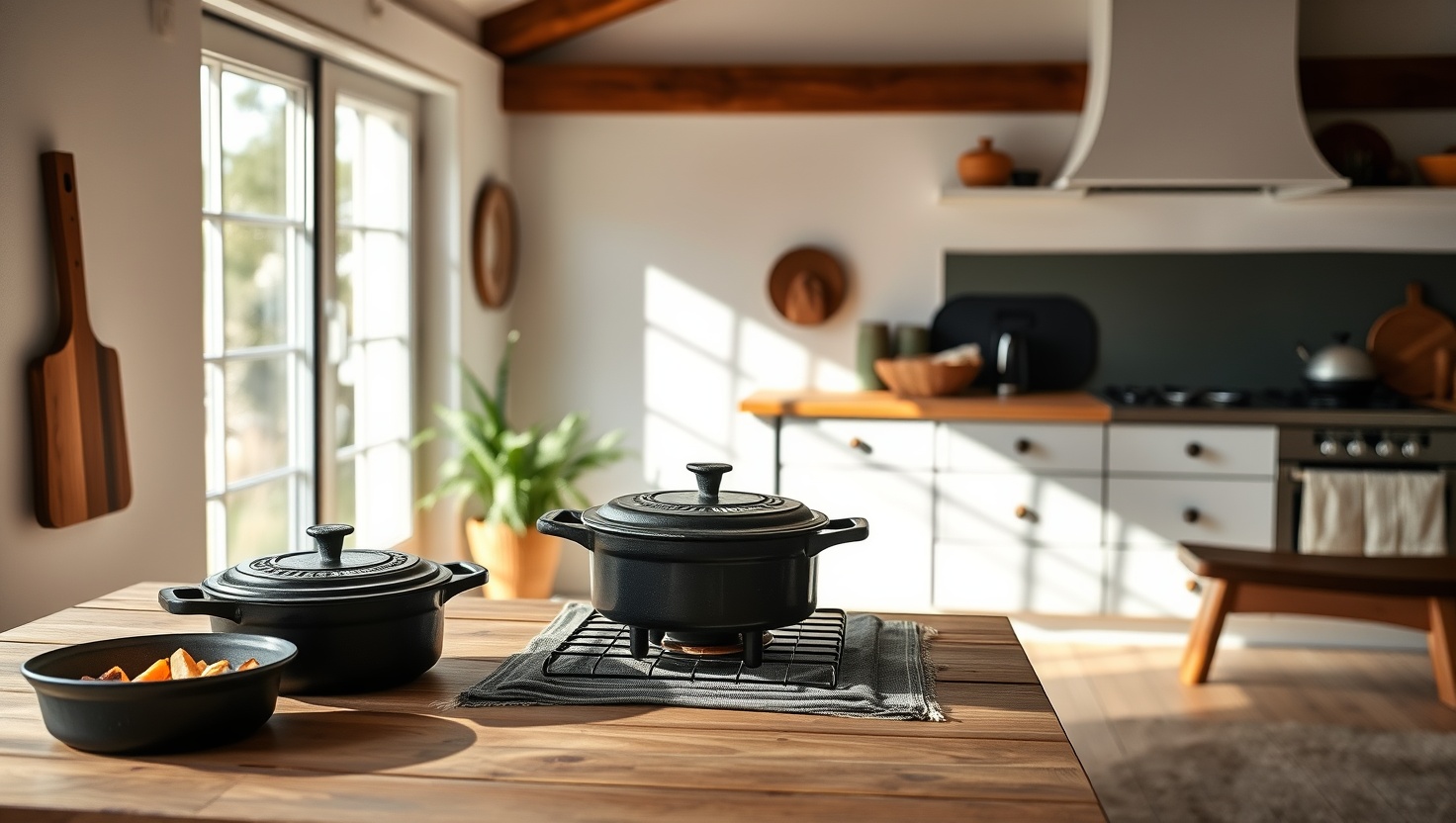
When the power goes out, a dutch oven doesn't care. It's been feeding people for 400 years — on campfires, coal beds, wood stoves, and open flames. No electricity required. No fuss. Just heat, food, and a piece of iron that will outlast everyone in your family tree. Here are the five best cast iron dutch ovens for camping and off-grid cooking in 2026.
Key Takeaways
- Cast iron dutch ovens work on campfires, coals, propane, wood stoves — any heat source you have
- Flanged lids hold coals on top for 360° even heat — bake bread, roast meat, even make cobbler
- A quality dutch oven is a one-time purchase that lasts for generations
- For most families camping or prepping, a 6-quart is the ideal size
- Pre-seasoned models are ready to use out of the box — just a light rinse and you're cooking
- The Lodge 6-Quart remains the gold standard at ~$55 — hard to beat that value
Dutch ovens are one of the most quietly essential pieces of gear you can own. People carried them across the American frontier. Lewis and Clark brought one on their expedition. The US Army issued them to soldiers. Homesteaders built entire meal plans around them. There's a reason this design hasn't changed in four centuries: it's already perfect.
If you're building out your camping kitchen, your emergency prep setup, or your off-grid cooking capability — a good cast iron dutch oven belongs at the top of your list. It's one of those rare tools that handles practically everything: soup, stew, bread, roasted meat, beans, rice, dessert. One pot. Infinite meals.
The best cast iron dutch oven for camping in 2026 depends on your situation — how many people you're feeding, how you're getting there, and what heat sources you'll have access to. This guide breaks down five excellent options to fit every setup.
Quick Comparison: Top 5 Dutch Ovens for 2026
| Dutch Oven | Price | Size | Best For |
|---|---|---|---|
| Lodge 6-Qt Camp | ~$55 | 6 qt | All-purpose campfire cooking |
| GSI Guidecast | ~$80 | 4 qt | Backpackers who want less weight |
| Overmont 6-Qt | ~$40 | 6 qt | Best value, budget-conscious buyers |
| Camp Chef Classic 10" | ~$45 | 4 qt | Dual-use campfire AND stove cooking |
| Stansport 2-Qt | ~$30 | 2 qt | Solo or 2-person camping |
1. Lodge 6-Quart Camp Dutch Oven
The Lodge Camp Dutch Oven is the standard by which all others are judged. Made in South Pittsburg, Tennessee since 1896, this pot has exactly the features you need for real campfire cooking: three short legs that hold it above coals, a flanged lid that holds coals on top for 360-degree heat, and a bail handle for hanging over an open flame. Pre-seasoned and ready to use the day it arrives. At $55, it's almost absurdly good value for something that will serve your family for life.
- Made in USA — exceptional quality control
- Flanged lid holds coals for even baking
- 3 legs perfect for campfire/coal cooking
- Pre-seasoned out of the box
- Bail handle for open fire hanging
- Lifetime piece — buy once
- Heavy (~8 lbs) — not for backpacking
- Legs make it wobbly on flat stoves
- Requires care to maintain seasoning
We recommend it because: It's the most proven dutch oven on the market at a price that makes it a no-brainer. If you only ever buy one, buy this one.
Check Price →2. GSI Guidecast Dutch Oven
Traditional cast iron dutch ovens are heavy. That's fine when you're driving to a campsite — but if you're hiking in, every ounce matters. The GSI Guidecast solves this with a proprietary casting process that makes it roughly 30% lighter than standard cast iron, while still delivering the heat retention and cooking performance you want. It's not as bombproof as a Lodge, but it's the best option available for people who want real dutch oven cooking without the weight penalty.
- 30% lighter than standard cast iron
- Excellent heat distribution for the weight
- Pre-seasoned with flaxseed oil
- Works on campfires and stoves
- Great for backpacking and hiking
- More expensive than competitors
- Not as indestructible as heavier cast iron
- Smaller capacity (4 qt)
We recommend it because: For hikers and backpackers who refuse to compromise on food quality, this is the answer. Lighter doesn't have to mean worse.
Check Price →3. Overmont Camp Dutch Oven 6-Quart
The Overmont punches well above its $40 price tag. It comes with thick walls for excellent heat distribution, three integrated legs, and a lid lifter included in the box — something Lodge charges extra for. The flanged lid holds coals for top-down heat, making it genuinely capable of everything the Lodge does at $15 less. It's heavier and not as refined in finish, but for emergency prep and campsite cooking, it delivers exactly what you need.
- Excellent value at ~$40
- Lid lifter included in the box
- Thick walls, good heat retention
- Flanged lid holds coals
- Pre-seasoned ready to use
- Heavier than Lodge
- Rougher surface finish
- Seasoning may need refreshing early on
We recommend it because: If your budget is tight or you want to stock multiple sizes for a prepper setup, the Overmont is the easiest yes on this list.
Check Price →Why a Dutch Oven Belongs in Every Emergency Kit
Here's the thing about grid-dependent cooking: when the grid goes down, it's gone. Your electric stove is a paperweight. Your microwave is decorative. Even your gas range depends on infrastructure that can fail.
A cast iron dutch oven requires nothing more than fire. Wood. Charcoal. Propane. A rocket stove you built in your backyard. It does not care where the heat comes from — it just turns that heat into food.
That's the freedom proposition. You're not dependent on systems that can fail. You're not waiting for FEMA. You're feeding your family a hot meal on day three of a power outage, the same way your great-great-grandmother did — and she didn't think it was a special skill. It was just how cooking worked.
Beyond emergencies, a dutch oven expands your camping cooking dramatically. You're no longer limited to whatever you can cook on a single-burner camp stove. You can bake cornbread. You can slow-cook a pork shoulder over coals. You can make a peach cobbler that would embarrass most home kitchens. The flanged lid design — with its raised edge that holds burning charcoal in place — turns your dutch oven into a genuine portable oven that delivers heat from both below and above, not just the bottom.
4. Camp Chef Classic 10-Inch Dutch Oven
The Camp Chef Classic solves a real problem: most camp dutch ovens with legs can't be used on flat stove grates or in kitchen ovens. The Camp Chef has a true flat bottom, which means it transitions seamlessly from campfire to propane camp stove to your kitchen range without wobbling. Its deep lid doubles as a skillet, adding a bonus cooking surface. If you want one pot that genuinely works in every setting — off-grid or on-grid — this is the pick.
- Flat bottom works on camp stoves AND kitchen stoves
- Deep lid functions as a skillet
- Pre-seasoned seasoned finish
- Works in conventional oven too
- Great for transitional or hybrid setups
- No legs — not ideal for direct coal/campfire use
- Lid doesn't hold coals for top-down baking
- Smaller capacity than 6-qt models
We recommend it because: It bridges the gap between camp cooking and home cooking — useful every day, not just in emergencies.
Check Price →5. Stansport Pre-Seasoned 2-Quart Dutch Oven
Solo campers and couples don't need to haul a 6-quart pot. The Stansport 2-quart is purpose-built for smaller groups — lighter, more packable, and easier to manage on the fire. It handles everything a larger dutch oven does, just in smaller portions. At $30, it's also the most accessible entry point into dutch oven cooking. A great starter piece, or a dedicated solo backpacker's pot for people who want real cooking on the trail.
- Lightest option on this list
- Lowest price — great entry point
- Perfect for 1-2 people
- Pre-seasoned out of the box
- Easy to manage on small campfires
- Too small for families
- Less thick than premium options
- Not ideal for large batch emergency cooking
We recommend it because: Not every situation calls for a 6-quart. For solo campers or people just getting started, the Stansport is a risk-free way to learn the skill.
Check Price →How to Season, Clean, and Store Your Cast Iron Dutch Oven
Cast iron has a reputation for being fussy. It's not. It just requires a different approach than your non-stick pan. Once you understand the logic — cast iron wants fat, hates standing water — you'll find it's actually one of the easiest pieces of cookware to maintain.
Initial Seasoning (If Your Dutch Oven Isn't Pre-Seasoned)
If your dutch oven came pre-seasoned, give it a quick rinse, dry it completely over low heat, and you're ready to go. If it needs seasoning from scratch:
- Wash with warm water and a stiff brush — no soap needed at this stage
- Dry it completely, then put it on low heat for 5 minutes to drive off all moisture
- Apply a very thin, even coat of flaxseed oil, vegetable oil, or Crisco — inside, outside, lid, all of it
- Place upside down in an oven at 450°F for one hour
- Let it cool inside the oven with the door closed
- Repeat this process 3-4 times for a proper initial seasoning
Every time you cook with fat — bacon, butter, lard, oil — you're adding to the seasoning. Over time, a well-used dutch oven develops a black, almost glassy surface that nothing sticks to and nothing corrodes.
Cleaning After Every Use
Hot water and a stiff brush or chain mail scrubber. Rinse while still warm. Dry it over heat immediately — never let it air dry, and never leave water sitting in it. Once dry, wipe the inside with a paper towel and a tiny amount of oil. That's it. Your dishwasher is the only thing that will truly wreck a dutch oven.
Storage
Store in a dry place. If you're putting the lid on, lay a paper towel between the pot and the lid to let air circulate and prevent moisture buildup. If you're storing long-term, a light coat of oil on all surfaces will prevent rust. In the field, seasoning is protective enough that you can leave it out for days without issue.
Rust happens. If you see surface rust, scrub it off with steel wool, re-dry, and re-season. A rusty dutch oven is not a ruined one — it's a five-minute restoration project.
The Secret Power of a Flanged Lid: Coal-Top Baking
The feature that separates a camp dutch oven from a regular one is the flanged lid — the raised rim around the edge of the lid. It's not decorative. It's functional in a very specific way: you can pile burning charcoal briquettes on top of the lid, and the flange keeps them from rolling off.
This turns your dutch oven into a true oven. Heat comes from the coals below the pot and from the coals sitting on the lid above the food. You get 360-degree even heat — the same principle as a kitchen oven, except you built the heat source yourself.
The general rule for baking temperature using charcoal briquettes:
- 350°F: Use roughly the diameter of your pot in briquettes on top (e.g., 12-inch pot = ~12 on top) and about half that on the bottom ring
- More briquettes on top = more top heat = better for baking bread and biscuits
- More briquettes on bottom = better for stews and boiling
With a bit of practice, you can bake cornbread, sourdough, cinnamon rolls, and apple cobbler on a campfire with results that will genuinely impress people. This is one of those skills that seems like a party trick until you're feeding your family a hot meal during a week-long power outage. Then it just feels like planning ahead.
What to Actually Cook in Your Dutch Oven (Off-Grid Menu Ideas)
The dutch oven's versatility is hard to oversell. Here's a practical list of what you can cook:
- One-pot stews and soups — the most efficient use of emergency food supplies
- Beans from scratch — dried beans are cheap, shelf-stable, nutritious, and a dutch oven handles them perfectly
- Whole chicken — brown it on the fire, add vegetables and broth, put the lid on and wait
- Bread — dutch oven bread has become a home-cooking trend, but it's been campfire-standard for centuries
- Rice — perfectly steamed with the lid trapping moisture
- Cobblers and crisps — desserts are good for morale, especially with kids in an emergency situation
- Pasta dishes — yes, pasta. One-pot pasta cooks just fine in a dutch oven over a campfire
- Breakfast casseroles — eggs, sausage, potato, cheese — one pot, fed for the day
When you're stocking an emergency food supply, think in terms of dutch oven meals. Dried beans, rice, oats, canned tomatoes, dried pasta — everything shelf-stable and everything dutch-oven friendly. Your cooking tool and your food storage strategy should match each other.
Frequently Asked Questions
What size dutch oven for camping?
For most camping groups of 4-6 people, a 6-quart dutch oven is the sweet spot. It holds enough food for a family meal without being impossibly heavy. Solo campers or couples can get away with a 2-quart model. If you're cooking for 8 or more, consider a 10- or 12-quart.
How do you season a cast iron dutch oven?
Clean the dutch oven with warm water and a stiff brush, then dry it completely over low heat. Apply a very thin layer of flaxseed oil, vegetable oil, or Crisco all over — inside, outside, lid included. Place it upside down in an oven at 450°F for one hour. Let it cool in the oven. Repeat 3-4 times for a solid initial seasoning. Every time you cook with fat in it, you're adding to the seasoning and building that slick black patina.
Can you use a dutch oven on a camp stove?
Yes, but it depends on the dutch oven. Models with a flat bottom (like the Camp Chef Classic) work great on camp stoves, propane burners, and regular kitchen stoves. Traditional camp dutch ovens with three legs are designed for campfires and coals — those legs make them wobbly on flat stove grates. If you want one that works both ways, look for a flat-bottom model.
How long does cast iron last?
Indefinitely. With basic care — keep it dry, keep it seasoned — a cast iron dutch oven will outlast you by generations. There are people cooking with 100-year-old cast iron pieces today. It's the opposite of disposable. A decent dutch oven bought today could still be feeding your grandkids, which makes the $55 price tag look pretty different.
What can you cook in a dutch oven while camping?
Almost anything. Stews, soups, chili, bread, biscuits, cobblers, roast chicken, braised meat, beans from scratch, rice, pasta. The flanged lid lets you place coals on top, turning it into a portable oven. This is why dutch ovens have been the go-to cooking vessel for explorers, settlers, and survivalists for centuries — one pot, every meal, any heat source.
Ready to Cook Off-Grid?
A dutch oven is the backbone of any off-grid kitchen. Pick up a Lodge 6-Quart and you'll be ready to feed your family whether the power is on or not. This is gear that works — on day one and on day one thousand.
See the Lodge Camp Dutch Oven →