Flour. Water. Salt. Yeast. Four ingredients — and yet most people have no idea what's actually in their daily bread. Dough conditioners, emulsifiers, bleaching agents, preservatives with names that read like a chemistry exam. The best bread maker machine lets you take back the most basic human act: feeding yourself, on your own terms. Fresh loaves every morning. No additives. No supply chain. No dependency.
Zojirushi BB-PDC20BA Virtuoso Plus — Best Overall
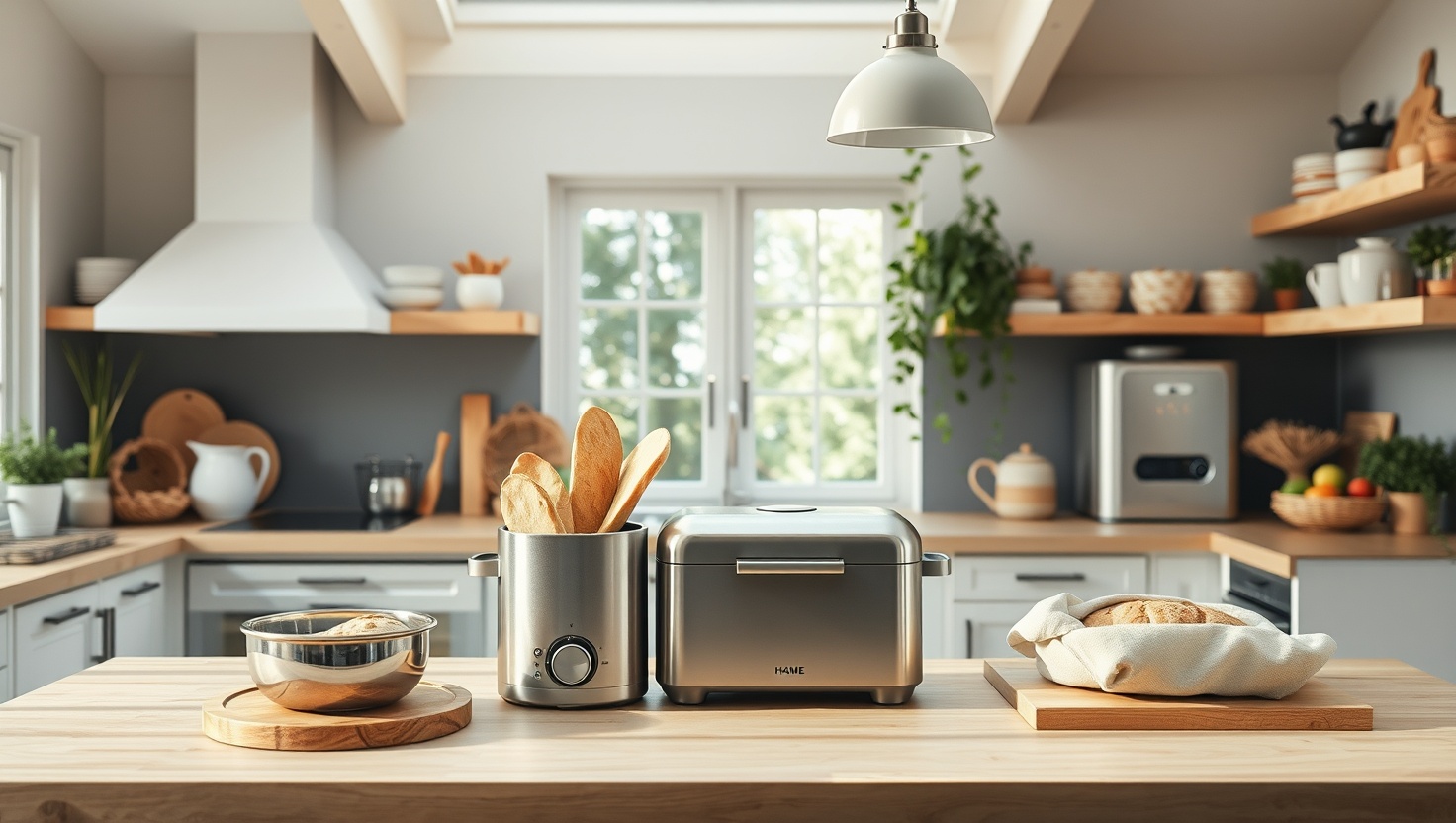
Zojirushi has been making bread machines longer than most of their competitors have existed, and the Virtuoso Plus is the culmination of that experience. It's the machine serious home bakers choose…
In a hurry? That’s our pick. Want the reasoning and the full comparison? Keep reading.
Key Takeaways
- A quality bread maker pays for itself within months compared to buying artisan bread at $6–10 per loaf
- The Zojirushi BB-PDC20BA Virtuoso Plus is the best overall — PFAS-free, dual heating, consistently perfect loaves
- Budget pick: the Hamilton Beach Digital at ~$65 is genuinely excellent for beginners
- Pair your bread maker with a home grain mill to go from whole berries to fresh bread — maximum self-sufficiency
- Gluten-free, sourdough, and whole wheat settings are worth checking before you buy
- Homemade bread costs roughly $0.75–1.50 per loaf in ingredients — a fraction of store prices
Why Baking Your Own Bread Is the Ultimate Self-Sufficiency Move
The grocery store bread aisle is one of the most heavily engineered spaces in modern retail. Shelf life is everything, which means manufacturers pack loaves with preservatives, dough conditioners, and industrial oils to keep bread "fresh" for two weeks. You deserve better than that — and so does everyone eating at your table.
When you bake your own bread, you control every single ingredient. You know exactly what went in. You can use the flour you've ground yourself, the sourdough starter you've been cultivating for years, or the heritage grain you bought in bulk and stored for emergencies. Your bread machine doesn't care about supply chain disruptions. It cares about dough, heat, and time.
There's also the cost angle. A decent artisan loaf runs $6–10 at most grocery stores or bakeries. Homemade bread costs roughly $0.75–1.50 in raw ingredients. If your household goes through a loaf a week, a mid-range bread maker pays itself off in under six months. After that, you're saving money every single week for years.
And the taste? There's no comparison. Bread that came out of the machine two hours ago is a completely different food from something that's been sitting in a plastic bag since Tuesday.
What to Look For in a Bread Maker (Skip the Gimmicks)
Bread makers have gotten smarter, but the marketing has gotten louder. Here's what actually matters:
Heating elements. Top-and-bottom dual heating gives you an evenly baked, properly crusted loaf. Bottom-only heating (common in budget machines) can leave the top pale and underdone. If you care about crust, pay attention to this.
Pan coating. PFAS (forever chemical) non-stick coatings are a concern. Look for ceramic-coated pans — they perform well and don't shed chemicals into your food. This is not a minor point if you're baking daily.
Programs and settings. Gluten-free, whole wheat, sourdough, quick-bake — the more varied your baking style, the more you'll use specialized cycles. A single "basic" setting gets old fast if you want to experiment.
Capacity. Most families do fine with a 2 lb machine. If you bake for a larger household or want to freeze loaves, look for models that go up to 2.5 lb.
Delay timer. Set it up before bed, wake up to fresh bread. A 12–15 hour delay timer is genuinely life-changing.
Now let's get to the machines worth buying.
The 5 Best Bread Makers of 2026
Zojirushi has been making bread machines longer than most of their competitors have existed, and the Virtuoso Plus is the culmination of that experience. It's the machine serious home bakers choose when they stop messing around — and for good reason.
Pros
- Dual heating elements (top + bottom) for even baking throughout
- PFAS-free ceramic non-stick pan — no forever chemicals in your food
- 2 lb loaf capacity, ideal for most households
- 13 preset courses including dedicated sourdough and gluten-free cycles
- Quick-bake cycle when you're in a hurry
- Delay timer up to 13 hours — wake up to fresh bread
- Consistently perfect loaves with minimal adjustment
Cons
- Most expensive option on this list at ~$350
- Larger footprint than competitors — needs counter space
- No viewing window on the lid
- Only rectangular loaf shape
- Custom recipes have a learning curve
The Breville Custom Loaf is for the baker who wants to actually understand bread — not just produce it. With four loaf size options and a collapsible kneading paddle that stays in the machine (not baked into your bread), this one was designed with real bakers in mind.
Pros
- Four loaf sizes: 1, 1.5, 2, and 2.5 lb — true flexibility
- 13 automatic programs covering all the bases
- Collapsible kneading paddle stays in the machine, not in your loaf
- Thick recipe manual with genuinely unique recipes
- Automatic fruit and nut dispenser for hands-free mix-ins
- Clear LCD display for easy operation
Cons
- Expensive at ~$280
- Heavy at 13 lbs — this stays where you put it
- Dispenser can jam with larger nuts or dried fruit pieces
- Kneading cycle is noticeably noisy
Seventy percent of the results at twenty-five percent of the price. The KBS 17-in-1 does what it says on the box — and then some. With a ceramic non-stick pan and a viewing window (rare at this price), it's a legitimate everyday machine for anyone who wants to start baking without a big upfront commitment.
Pros
- 17 programs including jam and yogurt — genuinely versatile
- 2 lb capacity handles family-sized loaves
- Ceramic non-stick pan at this price point is a win
- 3 crust color options for customizing your bake
- 15-hour delay timer — longest on this list
- Viewing window so you can watch the dough develop
- Includes recipe booklet, great for beginners
Cons
- Bread can still stick despite the non-stick coating
- Noisy during the kneading phase
- Instruction manual is less helpful than it should be
- Paddle occasionally bakes into the bottom of the loaf
Sixty-five dollars for a machine that produces a decent loaf, requires almost no learning curve, and comes from a brand that's been making kitchen appliances since 1910. The Hamilton Beach isn't going to win any competitions — but it will give you fresh, homemade bread every day without demanding anything from you.
Pros
- 14 preset cycles including a dedicated gluten-free setting
- 2 lb capacity covers most everyday needs
- 3 crust shade options
- 13-hour delay timer — set it before bed, eat fresh in the morning
- Compact size fits on most kitchen counters
- Dishwasher-safe pan for easy cleanup
- Extremely beginner-friendly — almost impossible to get wrong
Cons
- No fruit or nut dispenser
- Basic display — functional, not fancy
- Paddle leaves a hole in the bottom of every loaf
- Less consistent results with artisan or complex recipes
- Shorter cord than you'd like
Convection baking isn't just a buzzword — circulating hot air around your loaf produces a genuinely superior crust. The Cuisinart CBK-200 is the only machine in this price range that includes a convection fan, which puts it in a category of its own for anyone who cares deeply about crust texture and color.
Pros
- Convection fan circulates heat for superior, restaurant-quality crust
- 2 lb loaf capacity handles everyday baking
- 16 preset programs — the most on this list
- 3 crust color settings
- Audible alert for adding mix-ins mid-cycle
- 12-hour delay timer
- Low-carb setting — genuinely useful if you're watching macros
- Compact design for its feature set
Cons
- Pan coating wears over time with heavy use
- Can be noisy — especially with the convection fan running
- No automatic dispenser for fruits and nuts
- Loaf can be dense if measurements aren't precise
From Grain to Loaf: Pairing Your Bread Maker with a Home Mill
Here's where bread making becomes something more than a kitchen habit — it becomes a genuine self-sufficiency practice.
Whole grains — wheat berries, rye, spelt, einkorn — store for 25+ years when kept dry and sealed. That bag of all-purpose flour in your pantry? Six months, maybe a year. The moment you start thinking about food security, the math becomes obvious: store the grain, mill the flour when you need it, bake the bread.
Home grain mills grind fresh flour on demand. Fresh-milled flour retains all the natural oils, vitamins, and minerals that commercial milling strips away and sometimes "enriches" back in with synthetic versions. The flavor is also incomparably better — nutty, rich, alive.
The workflow is simple: mill your flour in the morning, add it to your bread maker with the other ingredients, press start. Come home to fresh bread. This is what food independence looks like in practice.
The Real Cost: Homemade Bread vs. Store-Bought
Let's run the numbers honestly, because the self-sufficiency case for bread making is strong even without the health argument.
A standard 2 lb loaf requires roughly: 3 cups bread flour (~$0.45), 1.5 tsp yeast (~$0.10), 1.5 tsp salt (~$0.02), 1 tbs olive oil (~$0.10), water. Total ingredient cost: roughly $0.70–1.20 per loaf depending on flour quality.
A comparable quality loaf at a grocery store or bakery: $6–10. If you bake three loaves a week, you save $15–27 weekly — that's $780–1,400 per year. Your bread maker pays itself off in weeks, not months.
Scale it up: bulk flour from a local mill or buying club, stored grain you mill yourself, and your cost per loaf drops even further. The more you invest in your food production system, the cheaper and better each loaf becomes.
Frequently Asked Questions
What type of flour is best for a bread machine?
Bread flour (high-protein, 12–14%) gives the best rise and texture in bread machines. All-purpose works too, but gives a denser loaf. For whole wheat, use a dedicated whole wheat or whole grain setting and consider adding vital wheat gluten for better structure. Avoid cake flour — it's too low in protein and will give you a flat, gummy result.
How much electricity does a bread maker use?
Most bread makers draw between 450–600 watts and run for 2–4 hours per loaf. That's roughly 1–2 kWh per bake, costing around 15–30 cents at average US electricity rates. Compare that to $6–10 for a store-bought artisan loaf. The economics are not even close.
Can I make gluten-free bread in a bread machine?
Yes — most modern bread machines include a dedicated gluten-free program. Gluten-free doughs behave differently (they're more like thick batter), so the cycle skips the second rise. Use a quality gluten-free bread flour blend for best results, and make sure your machine's pan is thoroughly cleaned if you alternate between regular and gluten-free loaves to avoid cross-contamination.
Can I make sourdough in a bread machine?
You can make sourdough-style bread using a starter in a bread machine, though true slow-fermented artisan sourdough is best done by hand. The Zojirushi Virtuoso Plus has a dedicated sourdough cycle that extends fermentation time for a more authentic result. For purely hands-off convenience, it's the best option on the market for sourdough in a machine.
Is a bread maker worth it for home self-sufficiency?
Absolutely. A bread maker lets you control exactly what goes into your food — no preservatives, no additives, no supply chain surprises. Pair it with a home grain mill and bulk grain storage, and you can produce fresh bread from shelf-stable whole grains indefinitely. The upfront cost pays back within months compared to buying artisan loaves, and the peace of mind is priceless.